问题引入 给定一个字符串集合,需要频繁执行「插入一个串」「查询某串是否存在」「查询某前缀是否出现过」「枚举所有以某前缀开头的串」等操作。把所有串存进 set 或哈希表,精确查找虽快,但前缀查询只能遍历所有键逐一比对,10 5 10^5 1 0 5 公共前缀 展开——字典树(Trie,又称前缀树) 把公共前缀压缩到同一条路径上,使前缀相关操作降至 O ( L ) O(L) O ( L ) L L L
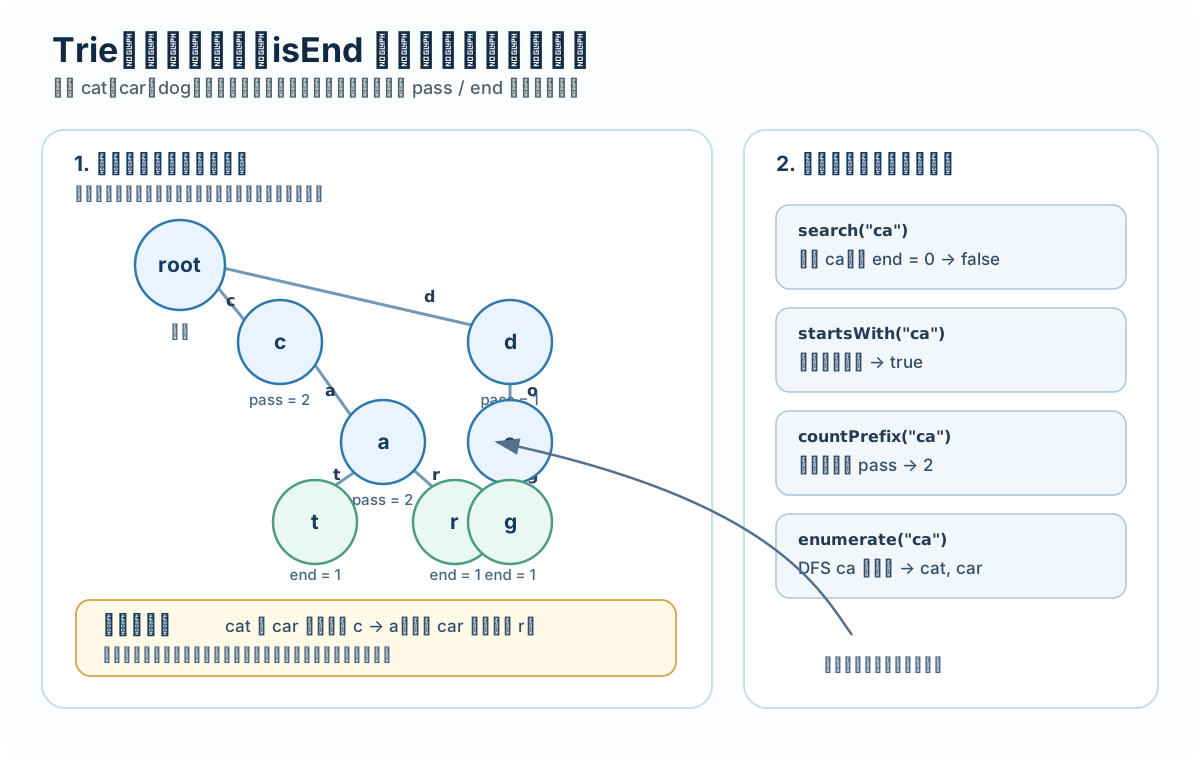
核心思想:用树表示公共前缀 每条从根到某节点的路径对应一个字符串前缀,路径上的边标记字符。根代表空串,每个节点可选地标记为「单词结尾」(isEnd)。共享前缀的串复用同一段路径,故插入 "cat" 后再插入 "car" 只需新增 r 一个节点。
1
2
3
4
5
6
7
8
9
10
11
12
插入 "cat" 、"car" 、"dog" 后的 Trie:/ \| | / \ |
四个核心操作:
insert(s)isEnd。search(s)s s s isEnd 为真。startsWith(p)p p p isEnd)。enumerate(p)p p p 单次插入/查找均为 O ( L ) O(L) O ( L )
基本实现与三种存储 每个节点需保存「子节点映射」与「结尾标记」。子节点映射有三种存储方式,权衡速度、空间与字符集灵活性。
数组存储(固定小字符集) 字符集为 26 个小写字母时,每个节点开 children[26],下标直接由 ch - 'a' 得到,O ( 1 ) O(1) O ( 1 )
1
2
3
4
5
6
7
8
9
10
11
12
13
14
15
16
17
18
19
20
21
22
23
24
25
26
27
28
29
30
31
32
33
34
35
36
struct TrieNode {26 ] = {}; bool isEnd = false ; class Trie {new TrieNode ();TrieNode* find (const string& s) {for (char ch : s) {int c = ch - 'a' ;if (!cur->children[c]) return nullptr ;return cur;public :void insert (string word) for (char ch : word) {int c = ch - 'a' ;if (!cur->children[c])new TrieNode ();true ;bool search (string word) find (word);return node && node->isEnd;bool startsWith (string prefix) return find (prefix) != nullptr ;
哈希表存储(任意字符集) 字符集较大或离散(Unicode、句子)时,用 unordered_map<char, Node*> 代替数组,按需分配,避免 26 倍浪费:
1
2
3
4
struct TrieNode {char , TrieNode*> children;bool isEnd = false ;
转移代价略高(哈希常数),但空间与字符集解耦。其余逻辑与数组版完全一致,把 children[c] 换成 children.count(c) / children[c] 即可。
全局二维数组(竞赛常用) 固定上界 + 全局数组 + 自由函数,无需 new、无指针开销,是竞赛最常见写法:
1
2
3
4
5
6
7
8
9
10
11
12
13
14
15
16
17
18
19
20
21
22
23
24
25
26
27
28
29
30
31
32
33
const int MAXN = 1e6 + 10 ; int trie[MAXN][26 ], cnt; bool isEnd[MAXN];void insert (const string& s) int u = 0 ; for (char ch : s) {int c = ch - 'a' ;if (!trie[u][c]) trie[u][c] = ++cnt;true ;bool search (const string& s) int u = 0 ;for (char ch : s) {int c = ch - 'a' ;if (!trie[u][c]) return false ;return isEnd[u];bool startsWith (const string& s) int u = 0 ;for (char ch : s) {int c = ch - 'a' ;if (!trie[u][c]) return false ;return true ;
要点:MAXN 须大于「所有串总长度」;多组数据时每次 memset 重置已用部分或维护版本号,否则残留状态污染结果。
复杂度 设 L L L Σ \Sigma Σ N N N
操作 时间 空间 insertO ( L ) O(L) O ( L ) — search / startsWithO ( L ) O(L) O ( L ) — 总空间 — O ( N ⋅ Σ ) O(N\cdot\Sigma) O ( N ⋅ Σ ) O ( N ) O(N) O ( N )
注意空间是 Trie 的主要代价:数组版每个节点占 Σ \Sigma Σ O ( N ) O(N) O ( N )
完整模板 类模板附带单词计数与「前缀出现次数」,支持基本删除(递归清理无分支节点):
1
2
3
4
5
6
7
8
9
10
11
12
13
14
15
16
17
18
19
20
21
22
23
24
25
26
27
28
29
30
31
32
33
34
35
36
37
38
39
40
41
42
43
44
45
46
47
48
49
50
51
52
53
54
55
56
57
58
59
struct TrieNode {26 ] = {};int pass = 0 ; int end = 0 ; class Trie {new TrieNode ();public :void insert (const string& s) for (char ch : s) {int c = ch - 'a' ;if (!cur->children[c])new TrieNode ();int countWords (const string& s) for (char ch : s) {int c = ch - 'a' ;if (!cur->children[c]) return 0 ;return cur->end;int countPrefix (const string& p) for (char ch : p) {int c = ch - 'a' ;if (!cur->children[c]) return 0 ;return cur->pass;void erase (const string& s) if (countWords (s) == 0 ) return ;for (char ch : s) {int c = ch - 'a' ;if (nxt->pass == 0 ) { nullptr ;return ;
pass(前缀计数)是 Trie 最常用的附加信息:自动补全、词频、删除判空都依赖它。erase 采用「计数归零即断链」的惰性回收,简单可靠;若需立即释放内存,可递归 delete 孤立子树。
经典示例 实现 Trie(LeetCode 208) 即上文基本实现,三函数 insert / search / startsWith,不再赘述。
添加与搜索单词 - 通配符(LeetCode 211) 支持 . 匹配任意字符。遇到 . 时 DFS 尝试所有子节点,靠 Trie 的树形结构天然剪枝:
1
2
3
4
5
6
7
8
9
10
11
12
13
14
15
16
17
18
19
20
21
22
23
24
25
26
27
28
29
30
31
32
33
34
35
36
struct TrieNode {26 ] = {};bool isEnd = false ;class WordDictionary {new TrieNode ();bool dfs (TrieNode* node, const string& s, int i) if (i == s.size ()) return node->isEnd;char ch = s[i];if (ch != '.' ) {int c = ch - 'a' ;return node->children[c] &&dfs (node->children[c], s, i + 1 );for (int c = 0 ; c < 26 ; ++c) if (node->children[c] &&dfs (node->children[c], s, i + 1 ))return true ;return false ;public :void addWord (string word) for (char ch : word) {int c = ch - 'a' ;if (!cur->children[c])new TrieNode ();true ;bool search (string word) return dfs (root, word, 0 );
通配符搜索的最坏复杂度为 O ( 26 L ) O(26^L) O ( 2 6 L )
单词搜索 II(LeetCode 212) 在字符网格中找出所有出现在字典中的单词。朴素做法对每个单词独立 DFS 网格,超时。关键优化:把所有单词建成一棵 Trie,DFS 网格时同步沿 Trie 下行 ,一旦无对应边即剪枝。
1
2
3
4
5
6
7
8
9
10
11
12
13
14
15
16
17
18
19
20
21
22
23
24
25
26
27
28
29
30
31
32
33
34
35
36
37
38
39
40
41
42
43
44
45
46
47
48
struct TrieNode {26 ] = {};class Solution {new TrieNode ();int m, n;void dfs (vector<vector<char >>& board, int i, int j, TrieNode* node, vector<string>& ans) char ch = board[i][j];if (ch == '#' ||'a' ]) return ; 'a' ];if (!node->word.empty ()) { push_back (node->word);clear (); '#' ; int dx[] = {-1 , 1 , 0 , 0 }, dy[] = {0 , 0 , -1 , 1 };for (int k = 0 ; k < 4 ; ++k) {int ni = i + dx[k], nj = j + dy[k];if (ni >= 0 && ni < m && nj >= 0 && nj < n)dfs (board, ni, nj, node, ans);public :vector<string> findWords (vector<vector<char >>& board, vector<string>& words) for (auto & w : words) { for (char ch : w) {int c = ch - 'a' ;if (!cur->children[c])new TrieNode ();size (); n = board[0 ].size ();for (int i = 0 ; i < m; ++i)for (int j = 0 ; j < n; ++j)dfs (board, i, j, root, ans);return ans;
命中后清空 word 是关键去重手段:同一单词只收集一次。Trie 在此扮演「多模式匹配的剪枝骨架」——共享前缀的单词只需探索一次网格路径。
替换单词(LeetCode 648) 把句子中每个单词替换为字典中存在的最短词根。把词根建 Trie,对每个单词沿 Trie 下行,首个 isEnd 节点即为最短词根 :
1
2
3
4
5
6
7
8
9
10
11
12
13
14
15
16
17
18
19
20
21
22
23
24
25
26
27
28
29
30
31
32
33
34
35
36
37
38
39
40
41
42
43
struct TrieNode {26 ] = {};bool isEnd = false ;class Solution {new TrieNode ();string rootOf (const string& word) {for (char ch : word) {int c = ch - 'a' ;if (!cur->children[c]) return word; if (cur->isEnd) return prefix; return word;public :string replaceWords (vector<string>& dict, string sentence) for (auto & r : dict) { for (char ch : r) {int c = ch - 'a' ;if (!cur->children[c])new TrieNode ();true ;stringstream ss (sentence) ;bool first = true ;while (ss >> word) {if (!first) ans += ' ' ;rootOf (word);false ;return ans;
「沿 Trie 下行取首个结尾」正是前缀树最自然的操作——哈希表无法在 O ( L ) O(L) O ( L )
字典中最长单词(LeetCode 720) 求字典中可由「逐字母添加」构成的最长单词:每步所加字母须使中间串都在字典中,同长取字典序最小。把所有单词建 Trie,从根 BFS,只走 isEnd 为真的节点(保证每一步都构成字典中存在的单词),按字典序升序遍历,首次到达更深的即为答案:
1
2
3
4
5
6
7
8
9
10
11
12
13
14
15
16
17
18
19
20
21
22
23
24
25
26
27
28
29
30
31
32
33
34
struct TrieNode {26 ] = {};bool isEnd = false ;class Solution {public :string longestWord (vector<string>& words) {new TrieNode ();for (auto & w : words) { for (char ch : w) {int c = ch - 'a' ;if (!cur->children[c])new TrieNode ();true ;push ({root, "" });while (!q.empty ()) { auto [node, s] = q.front (); q.pop ();if (s.size () > ans.size ()) ans = s;for (int c = 0 ; c < 26 ; ++c) { if (node->children[c] &&push ({node->children[c],char ('a' + c)});return ans;
isEnd 在此充当「可达性闸门」:只有沿途每一段都是真实单词的路径才允许继续延伸,确保答案可由逐字母添加构成。BFS 保证最先到达的最大深度即最长,字典序升序遍历保证同长取最小。
自动补全系统(LeetCode 642) 用户逐字符输入,实时返回以当前输入为前缀、热度最高的 3 个句子。Trie 中每个节点维护子树句子,输入到达前缀节点后 DFS 子树收集并按热度排序:
1
2
3
4
5
6
7
8
9
10
11
12
13
14
15
16
17
18
19
20
21
22
23
24
25
26
27
28
29
30
31
32
33
34
35
36
37
38
39
40
41
42
43
44
45
46
47
48
49
50
51
52
53
54
struct Node {char , Node*> ch;int freq = 0 ;class AutocompleteSystem {new Node ();void insert (const string& s, int times) for (char c : s) {if (!p->ch[c]) p->ch[c] = new Node ();void collect (Node* p, vector<pair<int ,string>>& out) if (!p) return ;if (p->freq > 0 )push_back ({-p->freq, p->word}); for (auto & [c, q] : p->ch) collect (q, out);public :AutocompleteSystem (vector<string>& sent,int >& times) {for (int i = 0 ; i < sent.size (); ++i)insert (sent[i], times[i]);vector<string> inputChar (char c) {if (c == '#' ) { insert (input, 1 );clear ();return {};if (!cur || !cur->ch.count (c)) {nullptr ; return {};int ,string>> cand;collect (cur, cand); sort (cand.begin (), cand.end ()); for (int i = 0 ; i < (int )cand.size () && i < 3 ; ++i)push_back (cand[i].second);return ans;
维护 cur 指针随输入下移,避免每次重新从根遍历前缀。子树收集在输入串足够长时子树已很小,实测可接受;若需更优,可在每个节点预存 top-3 列表,插入时沿途更新。
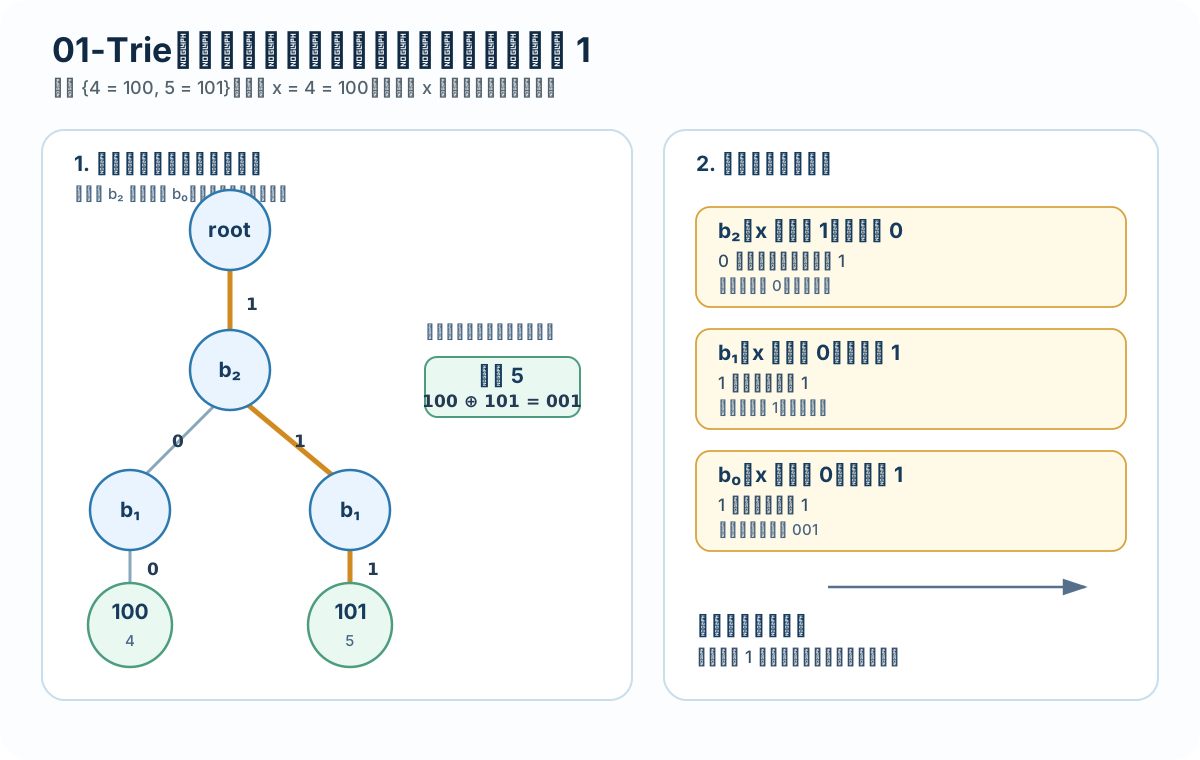
01-Trie(二进制字典树) 把整数按二进制位(从高到低)视作字符插入 Trie,每位只有 0/1 两种转移,便得到 01-Trie 。它把「数的大小关系」转化为「路径分支」,专门求解异或极值类问题。
核心贪心:求与 x x x x x x 相反 的分支(使该位异或结果为 1),不存在才选相同分支。
以 3 位二进制、插入 4 = 100 4=100 4 = 100 5 = 101 5=101 5 = 101
1 2 3 4 5 6 7 8 root| 1 | 0 / \0 ● ●1 ( 4 ) ( 5 )
查询与 x = 4 = 100 x=4=100 x = 4 = 100
b2:x x x b1:x x x b0:x x x 走到 5 5 5 4 ⊕ 5 = 1 4\oplus5=1 4 ⊕ 5 = 1
数组中两数最大异或(LeetCode 421) 把所有数插入 01-Trie,再对每个数查询最大异或:
1
2
3
4
5
6
7
8
9
10
11
12
13
14
15
16
17
18
19
20
21
22
23
24
25
26
27
28
29
30
31
32
33
34
35
36
class Solution {int trie[200010 * 31 ][2 ], cnt = 0 ;void insert (int x) int u = 0 ;for (int i = 30 ; i >= 0 ; --i) { int b = (x >> i) & 1 ;if (!trie[u][b]) trie[u][b] = ++cnt;int maxXor (int x) int u = 0 , res = 0 ;for (int i = 30 ; i >= 0 ; --i) {int b = (x >> i) & 1 ;int want = b ^ 1 ; if (trie[u][want]) {1 << i);else {return res;public :int findMaximumXOR (vector<int >& nums) memset (trie, 0 , sizeof trie);0 ;int ans = 0 ;for (int x : nums) {max (ans, maxXor (x)); insert (x);return ans;
复杂度 O ( n log V ) O(n\log V) O ( n log V ) V V V
最大异或子段和 子段 a [ l . . r ] a[l..r] a [ l .. r ] = p [ r ] ⊕ p [ l − 1 ] =p[r]\oplus p[l-1] = p [ r ] ⊕ p [ l − 1 ] p p p p [ 0 ] = 0 p[0]=0 p [ 0 ] = 0
1
2
3
4
5
6
7
8
9
10
11
12
13
int maxSubarrayXor (vector<int >& a) memset (trie, 0 , sizeof trie);0 ;insert (0 ); int pref = 0 , ans = 0 ;for (int x : a) {max (ans, maxXor (pref));insert (pref);return ans;
注意必须先插入 p [ 0 ] = 0 p[0]=0 p [ 0 ] = 0
限制下最大异或(LeetCode 1707) 每次查询「≤ m \le m ≤ m x x x m m m 离线排序 :查询按 m m m ≤ m \le m ≤ m
1
2
3
4
5
6
7
8
9
10
11
12
13
14
15
16
17
18
19
20
21
struct Query { int m, x, idx; };vector<int > maximizeXor (vector<int >& nums, vector<vector<int >>& Q) sort (nums.begin (), nums.end ());int n = Q.size ();vector<Query> qs (n) ;for (int i = 0 ; i < n; ++i)1 ], Q[i][0 ], i}; sort (qs.begin (), qs.end (),auto & a, auto & b){ return a.m < b.m; });vector<int > ans (n, -1 ) ;int p = 0 ;for (auto & q : qs) {while (p < (int )nums.size () && nums[p] <= q.m)insert (nums[p++]); if (p > 0 ) ans[q.idx] = maxXor (q.x);return ans;
离线化是 Trie 题的常见套路:当约束(此处 m m m
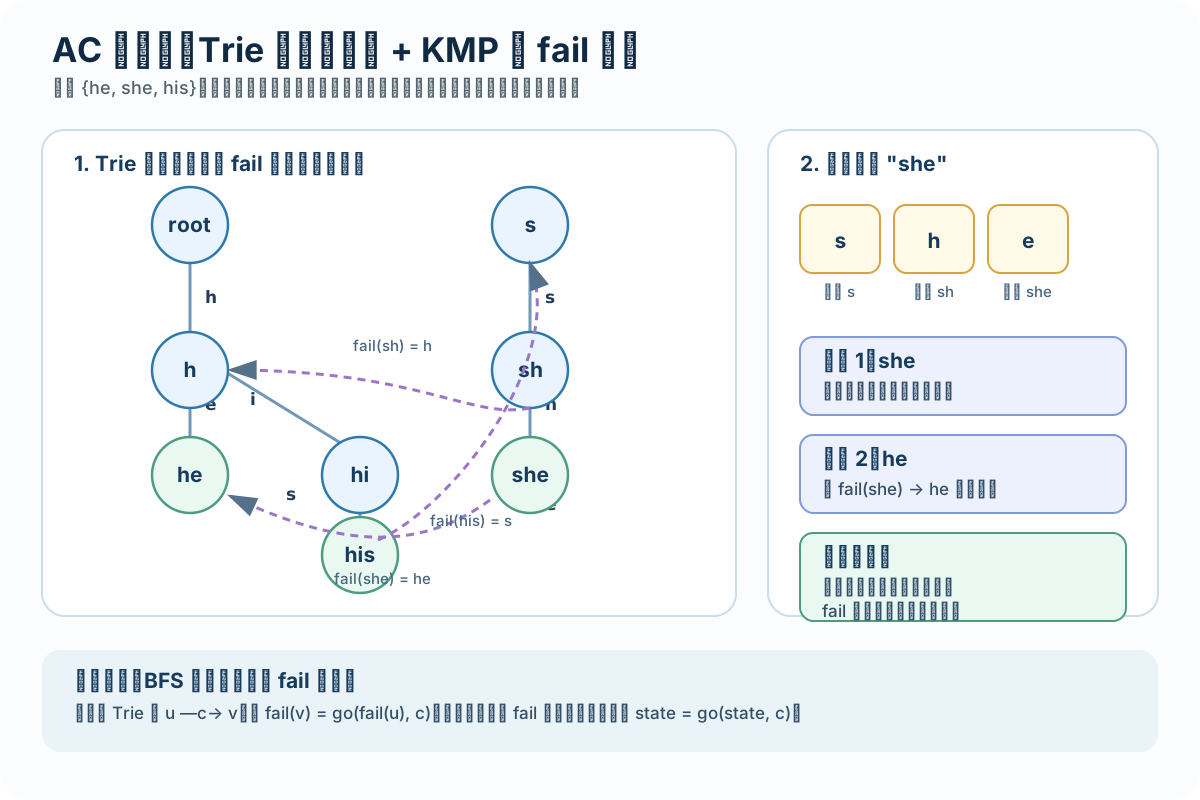
AC 自动机 Trie 解决「单模式串前缀」问题,AC 自动机(Aho-Corasick)在其上解决「多模式串匹配」——在文本中一次性找出所有模式串出现位置。本质是 Trie + KMP 的失配指针 :为每个节点建一条 fail 边,指向「当前所表示前缀的最长真后缀,且该后缀也是某模式串前缀」的节点。匹配时沿文本走 Trie,失配则跳 fail,避免回退文本指针。
以模式串 “he”、“she” 为例:
1 2 3 4 5 6 7 root/ \| | ( "he" ) | ( "she" )
fail 指针指向「最长且为某前缀的真后缀」:
sh -> h:“sh” 的后缀 “h” 仍是前缀。she -> he:“she” 的后缀 “he” 是完整模式。匹配文本 "she":root→s→sh→she 命中 “she”,沿 fail 跳到 he 又命中 “he”–一次扫描同时报出两个模式,无需为每个模式独立查找。
构建与匹配模板 build 用 BFS 构造 fail,并把缺失边补成 fail 转移(Trie 图 优化),使匹配时无需显式跳 fail:
1
2
3
4
5
6
7
8
9
10
11
12
13
14
15
16
17
18
19
20
21
22
23
24
25
26
27
28
29
30
31
32
33
34
35
36
37
38
39
40
41
const int MAXN = 1e6 + 10 ;int ch[MAXN][26 ], fail[MAXN], cnt[MAXN], tot;void insert (const string& s) int u = 0 ;for (char c : s) {int x = c - 'a' ;if (!ch[u][x]) ch[u][x] = ++tot;void build () int > q;for (int c = 0 ; c < 26 ; ++c)if (ch[0 ][c]) q.push (ch[0 ][c]);while (!q.empty ()) {int u = q.front (); q.pop ();for (int c = 0 ; c < 26 ; ++c) {if (ch[u][c]) {push (ch[u][c]);else {int query (const string& s) int u = 0 , ans = 0 ;for (char c : s) {'a' ]; for (int v = u; v && cnt[v] != -1 ; v = fail[v]) {-1 ; return ans;
fail 的构造利用了「父节点 fail 已就绪」的性质:ch[u][c] 的 fail 即 ch[fail[u]][c]。Trie 图把所有缺失边指向 fail 对应转移后,query 中 u = ch[u][c] 一步到位,无需 while 循环跳 fail。
AC 自动机适用于「文本 + 多模式串」场景。单模式串用 KMP 即可;多模式串 + 多文本且需在线则需 AC 自动机的更复杂变体(如后缀自动机、广义后缀树)。
可持久化 01-Trie 普通 01-Trie 在插入新数时会修改原有路径,无法回溯历史版本。可持久化 的核心:每次插入只新建「被修改路径」上的节点,其余子树通过指针共享旧版本。于是版本 i i i i i i
以「查询 a [ l . . r ] a[l..r] a [ l .. r ] x x x r r r l − 1 l-1 l − 1 siz[r] - siz[l] 判断某分支在区间内是否存在。
1
2
3
4
5
6
7
8
9
10
11
12
13
14
15
16
17
18
19
20
21
22
23
24
25
26
27
28
29
30
31
32
33
34
35
36
const int MAXN = 300010 , B = 23 ;int ch[MAXN * 24 ][2 ], siz[MAXN * 24 ];int root[MAXN], cnt;int insert (int pre, int x) int cur = ++cnt, rt = cur;for (int i = B; i >= 0 ; --i) {int b = (x >> i) & 1 ;1 ;1 ; return rt;int query (int l, int r, int x) 1 ]; r = root[r];int res = 0 ;for (int i = B; i >= 0 ; --i) {int b = (x >> i) & 1 , want = b ^ 1 ;if (siz[ch[r][want]] - siz[ch[l][want]] > 0 ) {1 << i;else {return res;
每个版本新增 B + 1 B+1 B + 1 O ( n B ) O(nB) O ( n B ) siz 充当「版本差」的计数器,使 Trie 具备了线段树般的区间可减性——这是可持久化数据结构的共同范式。
横向对比 场景 Trie 哈希表 其他 精确查找 O ( L ) O(L) O ( L ) O ( L ) O(L) O ( L ) O ( 1 ) O(1) O ( 1 ) 各有适用场景 前缀查询 O ( L ) O(L) O ( L ) 原生支持 不支持,需遍历键 — 字典序遍历 先序遍历即有序 需额外排序 平衡树亦可 通配符/正则 DFS 天然支持 不支持 — 多模式匹配 AC 自动机 O ( n + m ) O(n+m) O ( n + m ) 不适用 KMP 仅单模式 异或极值 01-Trie O ( n log V ) O(n\log V) O ( n log V ) 不适用 — 空间 共享前缀省,稀疏浪费 紧凑 —
判别要点:
前缀 vs 精确 :只需精确查找用哈希表更省空间;任何前缀相关操作(补全、最短词根、前缀计数)优先 Trie。静态 vs 动态 :模式串集合固定时 AC 自动机一次建树;需动态增删模式串则维护 Trie + fail 增量更新。异或 vs 大小 :求异或极值用 01-Trie;求第 k k k 区间 vs 全局 :单次全局查询用普通 Trie;需查询任意历史区间用可持久化 Trie。常见陷阱 忘记标记 isEnd :search 会把仅作为前缀的串误判为完整单词。节点数开小 :数组版 trie[N][26] 的 N N N × \times × 字符集未归一 :大写、数字、Unicode 未先映射到连续下标,越界或哈希冲突。01-Trie 位序错误 :必须从高位到低位插入与查询,否则贪心失效。01-Trie 未清空 :多组数据共用全局数组时未 memset 或重置 cnt,残留脏数据。最大异或与自身 :查询前未插入自身可避免,或在插入后再查询时排除同位置。AC 自动机 fail 构建顺序错 :必须 BFS 保证父节点 fail 先就绪;ch[u][c] 的 fail 依赖 ch[fail[u]][c]。AC 自动机重复计数 :同一节点沿 fail 链多次统计;统计后置 -1 标记或使用 last 优化跳链。Word Search II 重复收集 :命中单词后未清空 word,同一单词被多次加入答案。可持久化原地修改 :可持久化 Trie 必须为每个版本新建路径节点,复用旧节点会被后续版本污染。以为 Trie 能做任意子串匹配 :Trie 只擅长前缀;子串匹配需 AC 自动机(多模式)或后缀结构(单文本多模式)。小结 字典树把公共前缀压缩为共享路径,使插入、查找与前缀相关操作均降至 O ( L ) O(L) O ( L )
识别 :前缀补全 / 最短词根 / 前缀计数 / 多模式匹配 / 异或极值 → 优先考虑 Trie。选型 :固定小字符集用数组版;任意字符集用哈希版;竞赛用全局二维数组。异或问题用 01-Trie,多模式匹配用 AC 自动机,区间查询用可持久化 Trie。扩展 :AC 自动机 = Trie + 失配指针,把单模式 KMP 推广到多模式;可持久化 01-Trie 借「版本相减」获得区间可减性,与可持久化线段树同构。
![可持久化 01-Trie 插入时仅复制从根到叶的修改路径,未修改子树由版本共享;区间查询用 root[r] 与 root[l-1] 的 siz 差判断分支是否存在。](/img/algo/trie-tree/persistent-binary-trie-path-copy.svg)