
C++ 类型擦除详解
类型擦除让 C++ 在运行时处理未知类型。核心:隐藏具体类型,只暴露接口。标准库如 std::function, std::any, std::variant 都依赖它。
类型擦除是什么?
定义:运行时统一处理多种类型,编译时忘掉具体类型。只剩接口。
解决痛点:
- 模板太静态,无法处理运行时类型(插件、网络数据)。
- 容器存异构类型。
- API 解耦:接受任意 callable。
核心机制:动态多态 + vtable。
实现原理
三件套:
- 接口:纯虚基类。
- Holder:模板派生,持值。
- 包装器:持
Base*,转发调用。
vs 模板:模板是静态分发,零运行时开销;类型擦除是动态分发,有虚调用和堆分配成本。
vs variant:std::variant 是静态类型擦除,编译期已知所有类型,无堆分配。
标准库示例
std::any (C++17)
简化实现(核心:vtable + SBO):
1 | |
要点:vtable 管理类型相关操作;SBO 让小对象走栈,避免堆分配。
std::function (C++11)
统一 callable,核心:类型擦除 + vtable + SBO。
1 | |
调用流程:f(5) → 选 storage(buf_ / ptr_)→ vt_->call → 执行实际 callable。
其他类型擦除:std::shared_ptr/std::unique_ptr 也算简单擦除——指针类型统一,指向任意对象。
手动实现 Any(经典模式)
1 | |
关键点:Concept 擦除类型;Holder<T> 保留值;clone() 实现深拷贝;dynamic_cast 安全取回类型。
优缺点
| 优点 | 缺点 |
|---|---|
| 运行时灵活(插件、事件、回调) | 性能损失:虚调用 + 堆分配 |
| 统一接口,少模板膨胀 | 调试难:类型隐藏 |
| 解耦:调用方不依赖具体类型 | 内存占用大 |
何时用:真有动态类型需求。能静态解决时,优先用模板或 std::variant。
扩展
- C++20 Concepts:可约束类型擦除的模板参数,提前拒绝不满足接口的类型。
- CRTP:在需要静态多态时替代虚函数,减少运行时开销。
- 库:标准库不够用时看 Boost.TypeErasure /
Boost.Any。
总结
- 类型擦除 = 虚函数 + 模板桥接。
- 标准库实现:vtable + SBO 优化。
- 能用模板 /
variant就别用擦除。
Related Articles
2026-10-13
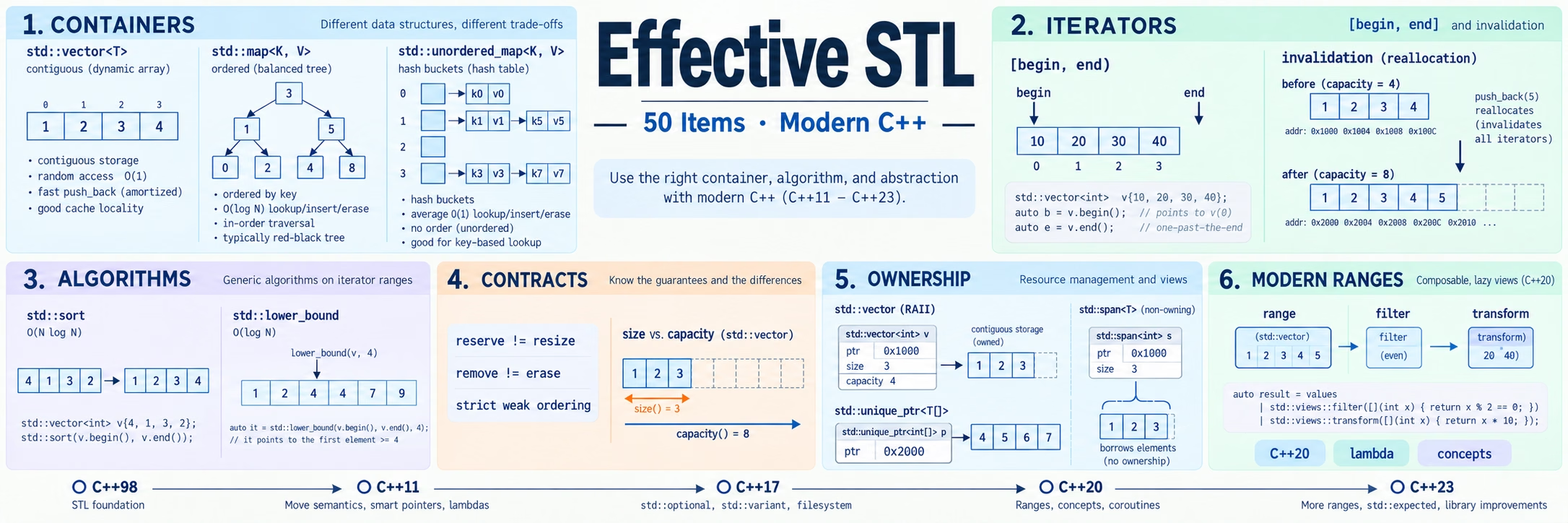
Effective STL 现代重读
《Effective STL》(Scott Meyers,2001,50 条)讨论的不是“标准库有哪些接口”,而是“怎样使用这些接口才正确、高效且可维护”。它成书于 C++98:当时没有移动语义、unique_ptr、标准哈希容器和 ranges,甚至需要解释为什么不能把 auto_ptr 放进容器。二十多年后,容器不变量、迭代器失效、严格弱序和算法前置条件依然成立,手写适配器、旧分配器限制...
2026-10-11
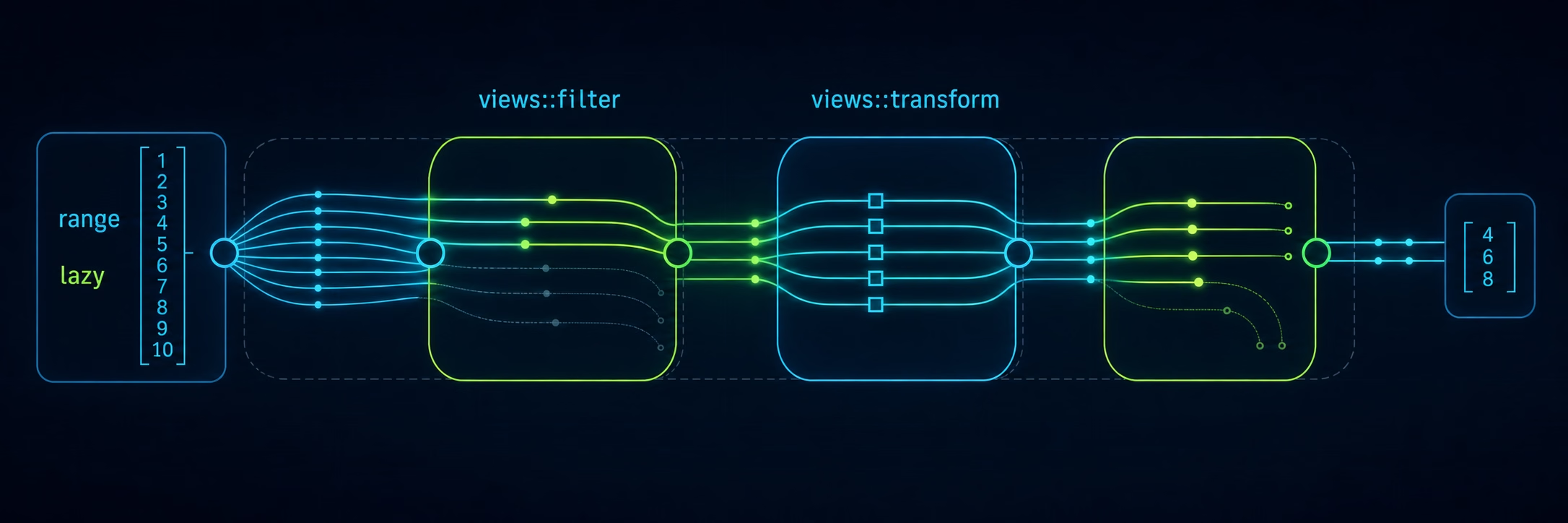
C++ Ranges(二):管道与 View Adaptors
本文承接《C++ Ranges(一):核心概念与算法》,聚焦视图工厂、适配器与管道组合。上一篇介绍 range/view 概念、借用与所有权、算法投影及 C++23 范围算法;本文示例统一以 C++23 为编译基线,章节中的 C++20/C++23 表示 ranges 设施所属的标准版本。库设施不可仅凭 -std=c++23 推断为已实现。 示例约定 本文只展示与讲解相关的代码片段,省略头文...
2026-09-28
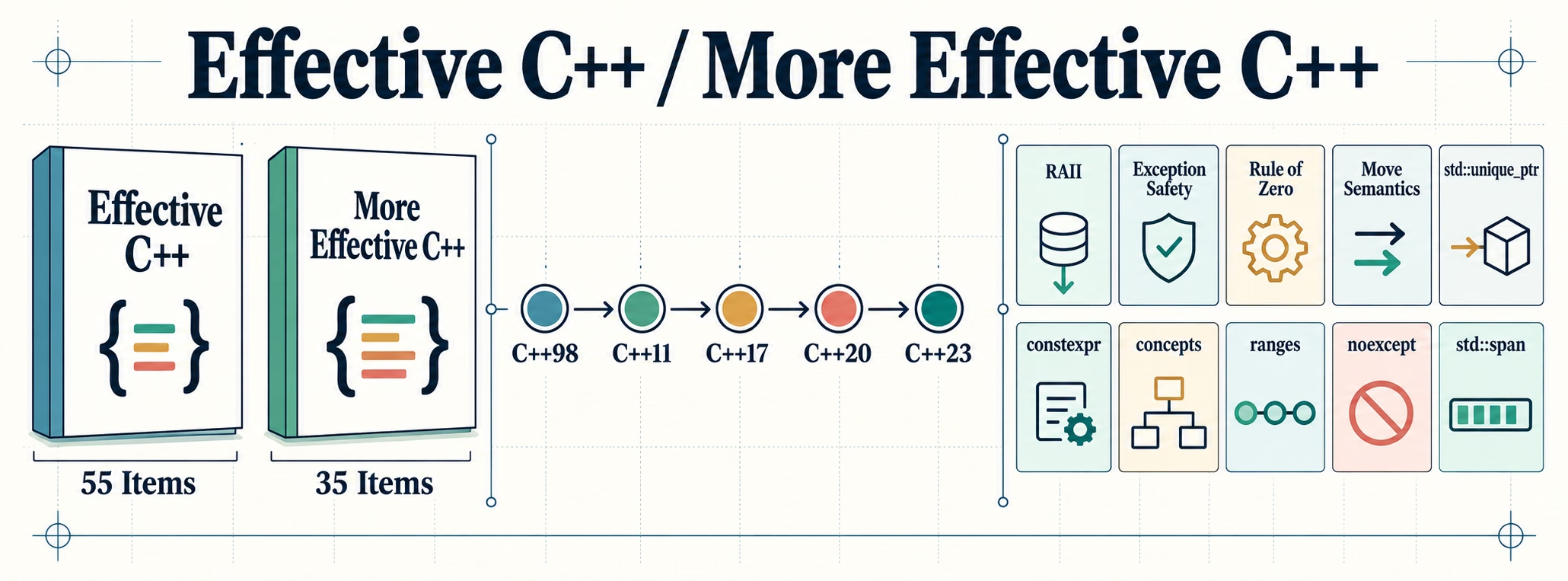
Effective C++ 与 More Effective C++ 现代重读
《Effective C++》第三版(2005,55 条)成书于 C++98,《More Effective C++》(1996,35 条)甚至早于第一个标准。两本书奠定了 C++ 工程实践的基本盘——RAII、异常安全、最小惊讶的接口设计——但在 C++11 之后的语言里,相当一部分条款已被语言特性直接解决,另一部分则换了个形态继续成立。本文按现代 C++(C++11–C++23)的标准逐...
2026-09-28
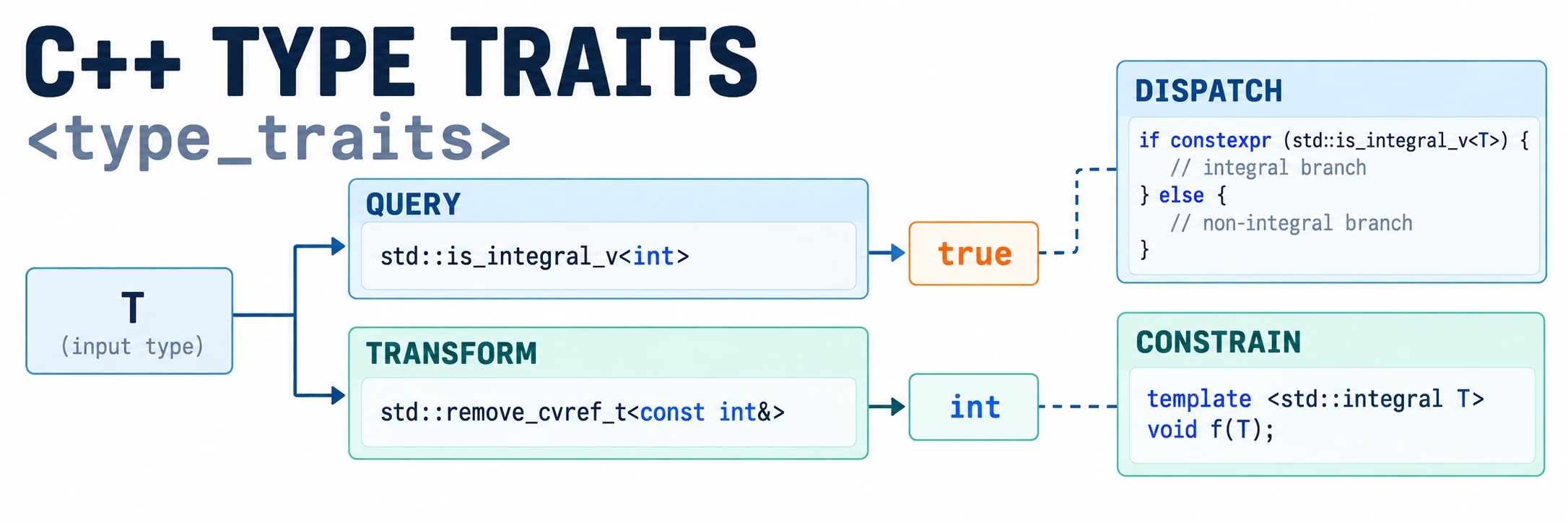
C++ Type Traits:在编译期认识和处理类型
📑 C++ 泛型编程系列:模板 | Type Traits | Concept 写泛型代码时,常会遇到这样的问题:T 是不是整数?能不能用一组参数构造?移动构造是否可能抛异常?去掉引用和 const 后是什么类型?这些问题取决于类型,通常要在编译期回答。标准库 <type_traits> 提供的 type traits(类型特征),就是一组回答这类问题的模板。 先看最常见的...
2026-08-12
C++ 易误用的标准库函数
标准库函数的名字不总能准确表达语义:边界不代表命中,划分不等于排序,逻辑删除不改变容器大小,保存回调也不一定拥有它访问的数据。本文按六个系列整理这些区别,重点说明返回值、前置条件和常见误用。代码省略头文件与 main;ranges 接口及 std::erase 等需要 C++20,其他版本要求单独注明。 二分查找:边界不代表命中 三个接口的区别 在默认升序比较下: 函数 返回值 val...
2026-08-10
C++ 容器速查手册
STL 容器与原生数组的 API 速查表,按“查得到、抄得来”组织,覆盖构造、访问、容量、修改、查找。原理(内存布局、扩容机制、迭代器失效的根因、选型权衡)见 C++ STL 容器,内存分配细节见 C++ STL Allocator。本文只列怎么用。 容器总览 容器 头文件 底层 迭代器类别 随机访问 T[N] 原生数组 - 连续 指针(随机) ✓ array <ar...