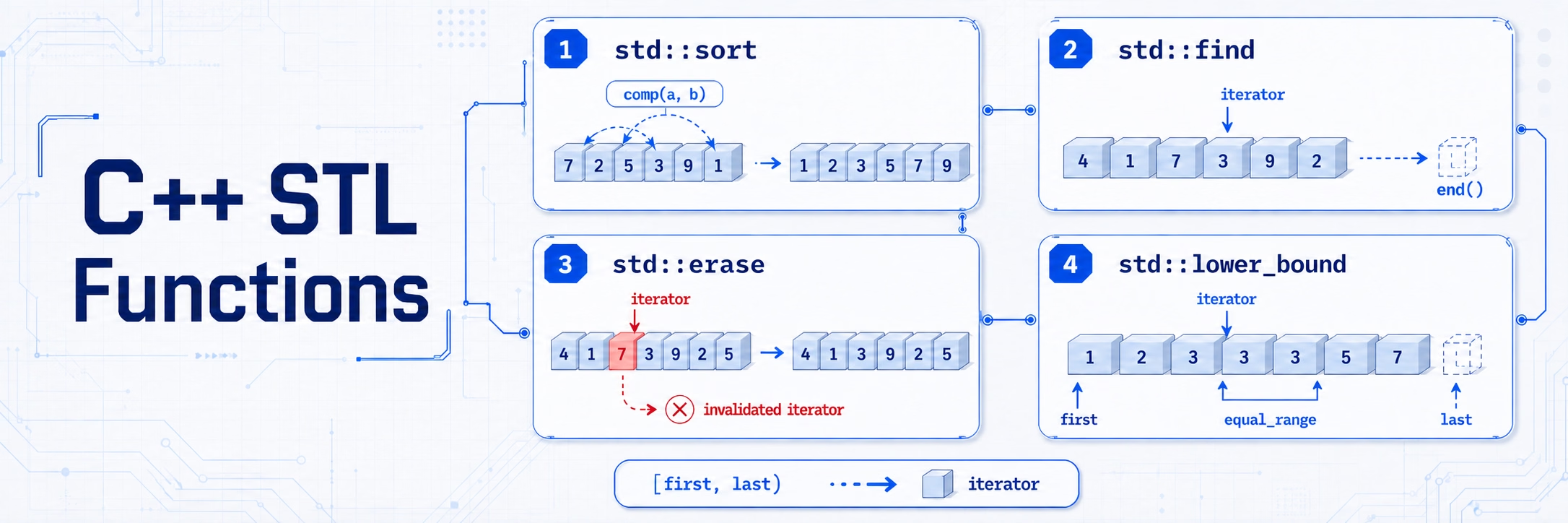
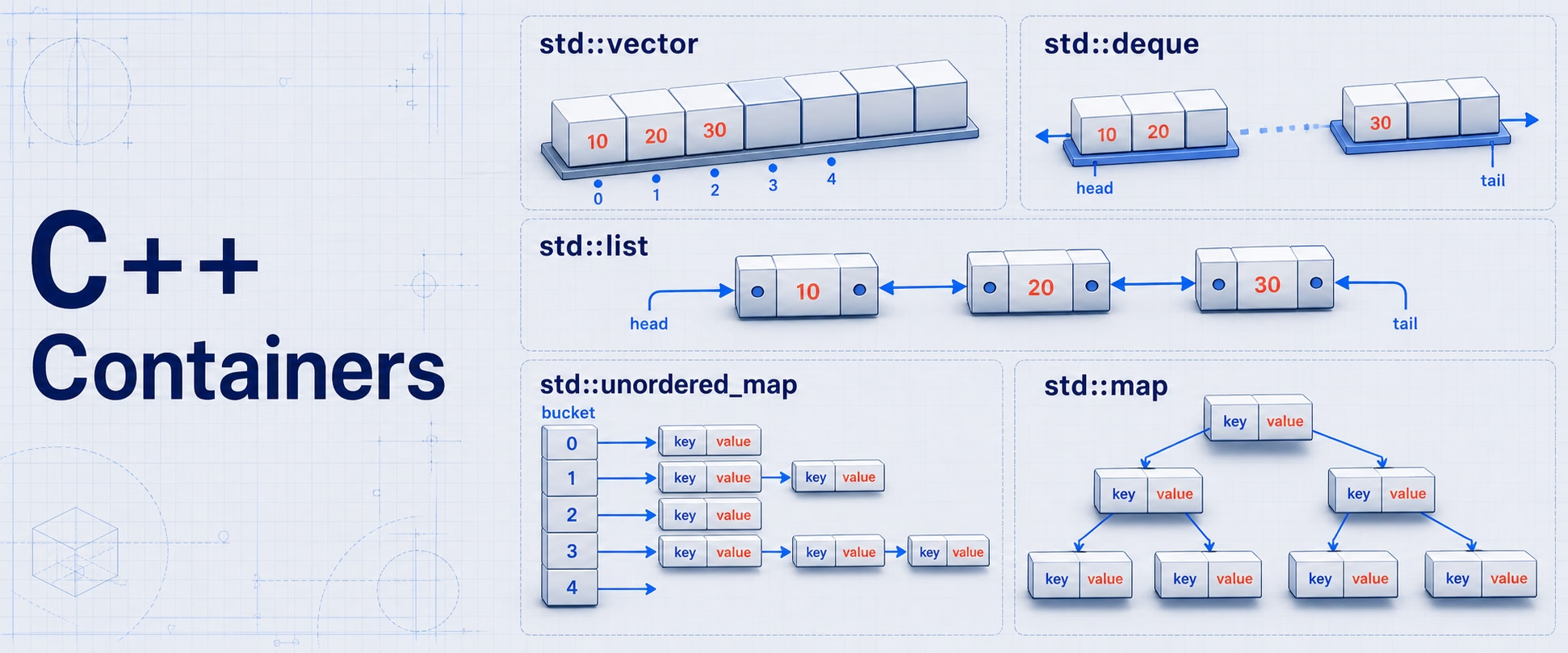
TBB (Threading Building Blocks) 是 Intel 出品的 C++ 并行编程库,也贡献给了 oneAPI 项目(oneAPI TBB)。它提供了高层抽象的任务并行、并行算法、并发容器和同步原语,让开发者不用直接操作 pthread/win32 thread 就能写出跨平台的高效并行程序。
安装与配置 获取方式 oneAPI TBB (推荐):https://github.com/oneapi-src/oneTBB包管理器:Ubuntu 下 apt install libtbb-dev,macOS 下 brew install tbb CMake 集成 1 2 find_package (TBB REQUIRED)target_link_libraries (my_app PRIVATE TBB::tbb)
头文件引用 1 2 3 4 5 #include <tbb/tbb.h> #include <tbb/parallel_for.h> #include <tbb/blocked_range.h> #include <tbb/concurrent_vector.h> #include <tbb/global_control.h>
TBB 使用 C++20 标准 构建(oneAPI TBB 2021+),编译时需要 -std=c++20 并链接 -ltbb。
并行算法 TBB 提供了多种并行算法模板,它们自动将工作负载划分给所有可用线程,无需手动管理线程生命周期。
parallel_for对索引范围做并行迭代:
1 2 3 4 5 6 7 8 9 10 11 12 #include <tbb/parallel_for.h> #include <tbb/blocked_range.h> constexpr size_t n = 1'000'000 ;std::vector<int > vec (n) ;parallel_for (tbb::blocked_range <size_t >(0 , n),const tbb::blocked_range<size_t >& r) {for (size_t i = r.begin (); i != r.end (); ++i) {
更简洁的分区形式(自动分区):
1 2 3 tbb::parallel_for (size_t (0 ), n, [&](size_t i) {
parallel_reduce并行规约(求和、求积等):
1 2 3 4 5 6 7 8 9 10 11 #include <tbb/parallel_reduce.h> auto sum = tbb::parallel_reduce (blocked_range <size_t >(0 , n), 0.0 ,const tbb::blocked_range<size_t >& r, double init) {for (size_t i = r.begin (); i != r.end (); ++i)return init;double a, double b) { return a + b; }
parallel_reduce 的参数依次是:范围、初始值、映射函数 (每个分片局部累加)、规约函数 (合并分片结果)。
parallel_scan并行前缀和:
1 2 3 4 5 6 7 8 9 10 11 12 13 14 15 #include <tbb/parallel_scan.h> std::vector<int > input (n, 1 ) , output (n) ;int sum = tbb::parallel_scan (blocked_range <size_t >(0 , n), 0 ,const tbb::blocked_range<size_t >& r, int init, bool is_final_scan) {for (size_t i = r.begin (); i != r.end (); ++i) {if (is_final_scan)return init;int a, int b) { return a + b; }
parallel_scan 会执行两轮 :第一轮计算部分和(不做最终写入),第二轮做最终写入。这个特性保证了缓存一致性的同时避免了大量同步开销。
parallel_sort1 2 3 4 5 6 #include <tbb/parallel_sort.h> int > data = {9 , 3 , 5 , 1 , 8 , 4 , 7 , 2 , 6 };parallel_sort (data.begin (), data.end ());parallel_sort (data.begin (), data.end (), std::greater <int >());
内部实现是 并行化的快速排序 ,当递归到足够小时会退化为串行排序。
parallel_for_each对迭代器范围并行执行函数:
1 2 3 4 5 6 #include <tbb/parallel_for_each.h> int > lst = {1 , 2 , 3 , 4 , 5 };parallel_for_each (lst.begin (), lst.end (), [](int & x) {2 ;
parallel_invoke并行执行多个独立函数:
1 2 3 4 5 6 7 #include <tbb/parallel_invoke.h> parallel_invoke (process_image_left_half (); },process_image_right_half (); },process_metadata (); }
适合任务粒度较大且互不依赖的场景。内部实现把函数包成 task,通过 task scheduler 调度。
parallel_pipeline并行流水线处理:
1 2 3 4 5 6 7 8 9 10 11 12 13 14 15 16 17 18 19 20 21 #include <tbb/parallel_pipeline.h> parallel_pipeline (8 , make_filter <void , Frame>(read_frame ();if (!f.valid) fc.stop ();return f;make_filter <Frame, ProcessedFrame>(return decode (f); }make_filter <ProcessedFrame, void >(render (f); }
流水线模型:第一阶段 (读帧)串行有序 → 第二阶段 (解码)并行 → 第三阶段 (渲染)串行无序。parallel_pipeline 确保了不同阶段的并行度和顺序约束。
分区器 TBB 提供多种分区策略,控制工作负载的划分方式。
分区器 行为 blocked_range<T>一维连续范围,按块粒度切分 blocked_range2D<T>二维范围(行列),在大图像处理时有用 blocked_range3D<T>三维范围 simple_partitioner严格按 grainsize 切分,粒度精确 auto_partitioner自动调整粒度,兼顾负载均衡与开销,默认推荐 static_partitioner一次性切分,不 work-stealing,适合各分片负载极度均匀的场景 affinity_partitioner利用缓存亲和性,适合每次范围相同的重复调用
1 2 3 4 5 6 7 8 9 10 11 12 13 parallel_for (blocked_range <size_t >(0 , n, 256 ), const auto & r) { },parallel_for (blocked_range <size_t >(0 , n),const auto & r) { }
选择建议 :
元素处理开销大时,grainsize 小一点或直接用 auto_partitioner 元素处理开销小时,grainsize 大一点,减少任务调度开销 各分片负载不均时,用 auto_partitioner 让 TBB work-stealing 自动均衡 任务分组 task_groupTBB 的 task_group 允许动态添加和等待任务:
1 2 3 4 5 6 7 8 9 #include <tbb/task_group.h> run ([&] { process_part1 (data); });run ([&] { process_part2 (data); });run ([&] { process_part3 (data); });wait ();
也可以配合异常处理:
1 2 3 4 5 6 7 8 tbb::task_group tg;try {run ([] { might_throw (); });wait ();catch (...) {cancel ();
structured_task_group(C++17 风格)structured_task_group 在析构时自动 wait(),且只在单线程环境下使用(不能跨线程 run)。更轻量、安全检查更严格:
1 2 3 4 tbb::structured_task_group stg;run ([] { do_work(); });run ([] { do_more_work(); });wait ();
区别总结 :
特性 task_groupstructured_task_group跨线程 run 可以 不可以 外部取消 支持 cancel() 支持 析构自动 wait 不会 ,会触发 UB会 开销 稍大 极小
并发容器 TBB 提供线程安全的容器,内部使用细粒度锁或 lock-free 技术,允许并发读写。
concurrent_vector动态数组,支持并发 push_back 和随机访问,不会因为扩容而 invalidate 已有元素:
1 2 3 4 5 6 7 8 9 10 11 12 #include <tbb/concurrent_vector.h> int > cv;parallel_for (size_t (0 ), 10000 , [&](size_t i) {push_back (i);int val = cv[42 ];42 ] = 999 ;
重要 :concurrent_vector 保证的是 grow 操作安全 (push_back, emplace_back),不同线程写不同索引安全,但写相同索引 需要外部加锁。
concurrent_queue / concurrent_bounded_queue1 2 3 4 5 6 7 8 9 10 11 12 13 14 15 #include <tbb/concurrent_queue.h> int > q;set_capacity (1024 );parallel_for (size_t (0 ), 1000 , [&](size_t i) {push (i);int item;while (q.try_pop(item)) {process (item);
容器 特点 concurrent_queue<T>无界、多生产者多消费者安全 concurrent_bounded_queue<T>有界、try_push 可在满时立即失败、支持阻塞的 push/pop
concurrent_hash_map支持并发插入/查找/删除的哈希表:
1 2 3 4 5 6 7 8 9 10 11 12 13 14 15 16 17 18 19 #include <tbb/concurrent_hash_map.h> int > chm;auto accessor = chm.accessor; if (chm.find (accessor, key))1 ;else insert (accessor, {key, 1 });auto const_accessor = chm.const_accessor;if (chm.find (const_accessor, key))use (const_accessor->second);
accessor 本质上是一个 scoped 锁 ,持有对应桶的读/写锁,析构时释放。
concurrent_unordered_map / concurrent_unordered_setC++11 风格的无序关联容器(oneTBB 2021 引入):
1 2 3 4 5 6 7 8 9 10 11 #include <tbb/concurrent_unordered_map.h> int , std::string> cum;parallel_for (size_t (0 ), 1000 , [&](size_t i) {emplace (i, "value_" + std::to_string (i));const auto & p) {println ("{} -> {}" , p.first, p.second);
与 concurrent_hash_map 的区别:
concurrent_hash_map 使用 accessor(锁语义),更精细的控制concurrent_unordered_map 接口更接近 std::unordered_map,使用简单concurrent_priority_queue线程安全的优先队列:
1 2 3 4 5 6 7 8 9 10 11 12 #include <tbb/concurrent_priority_queue.h> int > cpq;push (5 );push (10 );push (3 );int top;int , std::greater<int >> max_heap;
同步原语 TBB 提供多种互斥量,在不同场景下有不同的性能特征:
1 2 3 4 5 #include <tbb/spin_mutex.h> #include <tbb/spin_rw_mutex.h> #include <tbb/queuing_mutex.h> #include <tbb/queuing_rw_mutex.h> #include <tbb/mutex.h>
类型 特点 适用场景 spin_mutex自旋锁,极高开销下直接 busy-wait 临界区 极短 (< 几十条指令) spin_rw_mutex读写自旋锁,读读不互斥 大量读、少量写,临界区短 queuing_mutex排队自旋锁,FIFO 公平 避免锁饥饿,临界区稍长 queuing_rw_mutex排队读写自旋锁 公平读写锁 mutex包装系统 mutex(pthread_mutex) 临界区较长或有系统调用时 rw_mutex包装系统读写锁 长临界区的读写分离
用法 :统一遵循 scoped_lock / RAllock 模式:
1 2 3 4 5 6 7 tbb::spin_mutex mtx;int shared_counter = 0 ;parallel_for (size_t (0 ), 10000 , [&](size_t ) {lock (mtx);
最佳实践 :
如果临界区是 10~20 条指令 级别的,用 spin_mutex 最合适 如果可能等待较长(IO、malloc 等),用 mutex(避免浪费 CPU) 永远不要 spin_mutex + 阻塞操作,那是灾难 scoped_lock 保证异常安全全局控制 控制线程数、优先级等全局属性:
1 2 3 4 5 6 7 8 9 10 #include <tbb/global_control.h> tbb::global_control gc ( tbb::global_control::max_allowed_parallelism, 4 ) parallel_for (size_t (0 ), n, [&](size_t i) { });
可以在代码中多次嵌套 ,内层取最小值:
1 2 3 4 5 6 7 {tbb::global_control gc (tbb::global_control::max_allowed_parallelism, 2 ) ;tbb::global_control gc2 (tbb::global_control::max_allowed_parallelism, 4 ) ;
另一种控制方式——设置线程栈大小:
1 tbb::global_control gc (tbb::global_control::thread_stack_size, 1024 * 1024 ) ;
任务调度器高级用法 task_arena限制任务在某组线程上执行:
1 2 3 4 5 6 7 8 9 #include <tbb/task_arena.h> tbb::task_arena arena (2 ) ; execute ([&] {parallel_for (size_t (0 ), n, [&](size_t i) {
可以绑定到特定的 NUMA 节点:
1 2 tbb::task_arena arena (tbb::task_arena::constraints{} .set_numa_id(0 ))
task_scheduler_handle自 oneTBB 2021 起,可以手动控制调度器的生命周期:
1 2 3 4 5 6 #include <tbb/task_scheduler_handle.h>
内存分配器 TBB 提供高性能的内存分配器,避免多线程下的 false-sharing 和锁竞争:
1 2 3 4 5 6 7 8 9 10 11 12 13 14 15 #include <tbb/scalable_allocator.h> int , tbb::scalable_allocator<int >> vec (1000 );using tbb_vector = std::vector<double , tbb::scalable_allocator<double >>;#include <tbb/cache_aligned_allocator.h> struct alignas (64 ) PaddedCounter {int64_t value;
分配器 用途 tbb::scalable_allocator<T>全局可伸缩分配器,减少堆锁竞争 tbb::cache_aligned_allocator<T>缓存行对齐,避免 false sharing tbb::zero_allocator<T>分配的同时零初始化
Flow Graph 简介 TBB Flow Graph 允许通过有向无环图定义计算,节点自动并行:
1 2 3 4 5 6 7 8 9 10 11 12 13 14 15 16 #include <tbb/flow_graph.h> flow::function_node<int , int > square (g, tbb::flow::unlimited, [](int x) { return x * x; }) flow::function_node<int , void > print (g, tbb::flow::serial, [](int x) { println("result: {}" , x); }) make_edge (square, print);for (int i = 0 ; i < 100 ; ++i)wait_for_all ();
节点类型:
类型 行为 function_node接收一个输入,产生一个输出 multifunction_node一个输入可以产生 0~N 个输出 join_node等待多个输入同时到达后组合 split_node将一个 tuple 拆成多路 broadcast_node广播到所有后继节点 buffer_node缓冲消息(可排序、无限容量) queue_node排队消息,FIFO
并发度控制:tbb::flow::serial(串行)、tbb::flow::unlimited(无限并发)、或指定数字。
性能建议 粒度控制 并行不是银弹。颗粒度太小,任务调度开销会淹没实际计算。
1 2 3 4 parallel_for (size_t (0 ), vec.size (), [&](size_t i) {light_op (vec[i]);
确保每个分片有 至少上万条指令 的工作量,或者使用 blocked_range 手动控制颗粒度。
避免 False Sharing 多线程写入同一缓存行的不同变量会导致严重的性能下降:
1 2 3 4 5 6 int counters[8 ];alignas (64 ) int counters[8 ];
复用 Task Scheduler TBB 的 task scheduler 在第一次调用并行算法时初始化,之后复用。如果有多个短促并行段,尽量在一个初始化周期内完成:
1 2 3 4 5 6 7 8 for (int i = 0 ; i < 100 ; ++i)parallel_for (...);parallel_for (0 , 100 , [&](int ) {
选择合适的容器 并发插入而不删改已有数据 → concurrent_vector 生产者-消费者队列 → concurrent_bounded_queue(有界背压是关键) 并发字典 → 读多写少用 concurrent_hash_map,简单场景用 concurrent_unordered_map 快速分配内存 → tbb::scalable_allocator NUMA 感知 多路服务器场景:
1 2 3 4 5 6 tbb::task_arena numa_arena (tbb::task_arena::constraints{} .set_numa_id(current_numa_node)) execute ([&] {parallel_for ();
配合 hwinfo 或 libnuma 获取 NUMA 拓扑,按节点分配数据。
与 C++17 并行算法对比 C++17 引入了 std::execution::parallel_policy:
1 2 std::sort (std::execution::par, data.begin (), data.end ());begin (), data.end (), work);
维度 TBB C++17 并行算法 编译器要求 C++20 + TBB 库 C++17 + TBB/别的后端 可控粒度 blocked_range, 分区器无(由实现决定) 容器广度 concurrent_* 全套无 任务模型 task_group, flow graph 无 缓存亲和 affinity_partitioner无 可移植性 需安装 TBB 标准库自带(但具体后端可能不同)
两者并不冲突:可以用 C++17 并行算法做简单并行,用 TBB 做复杂流水线、并发容器和任务图。
综合示例 图像处理流水线——读取 → 并行处理 → 结果汇总:
1 2 3 4 5 6 7 8 9 10 11 12 13 14 15 16 17 18 19 20 21 22 23 24 25 26 27 28 29 30 31 32 33 34 35 36 37 38 39 40 41 42 43 44 45 46 47 48 49 50 51 52 53 54 55 56 57 58 59 #include <tbb/tbb.h> #include <vector> #include <cstdio> struct Image {int id;uint8_t > data;bool valid;Image read_image (int id) {return Image{id, std::vector <uint8_t >(1024 , 0 ), true };void process_segment (Image& img, size_t start, size_t end) for (size_t i = start; i < end; ++i)static_cast <uint8_t >(img.data[i] * 1.5 );struct Result {int id;double avg;int main () constexpr int count = 100 ;parallel_for (0 , count, [&](int i) {push_back (read_image (i));parallel_for (blocked_range <size_t >(0 , images.size (), 4 ),const auto & r) {for (size_t i = r.begin (); i != r.end (); ++i) {auto & img = images[i];process_segment (img, 0 , img.data.size ());auto total_avg = tbb::parallel_reduce (blocked_range <size_t >(0 , images.size ()), 0.0 ,const auto & r, double init) {for (size_t i = r.begin (); i != r.end (); ++i) {double sum = 0 ;for (auto v : images[i].data)size ();return init;double >{}size ();println ("average brightness: {}" , total_avg);
这个例子演示了 TBB 中最常用的几个组件:
concurrent_vector 做线程安全的收集parallel_for + blocked_range 做数据并行parallel_reduce 做结果聚合所有同步由库自动完成,不需要显式创建或 join 任何线程 TBB 的核心理念是 让开发者关注任务逻辑,而不是线程管理 。用好 TBB,你的并行代码既不会比手写 pthread 慢,又能保持代码的简洁和可移植性。