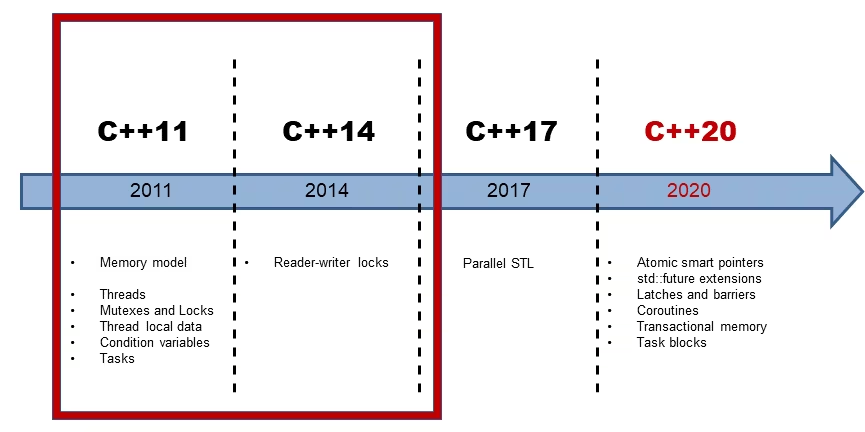
Cpp Timeline
C++: 从 C++11 到 C++23 的演进之路
C++ 从 2011 年开始进入了快速发展的时代,每三年一个新标准,带来了大量现代特性。本文将梳理 C++11 到 C++23 的主要特性和常用特性。
C++11
| Core Feature | Library | Concurrency |
|---|---|---|
C++14
| Core Feature | Library | Concurrency |
|---|---|---|
C++17
| Core Feature | Library | Concurrency |
|---|---|---|
C++20
| The Big | Core Feature | Library | Concurrency |
|---|---|---|---|
C++23
| Core Feature | Library | Concurrency |
|---|---|---|
|
C++11:现代 C++ 的开端
C++11 是 C++ 历史上最重要的标准之一,它彻底改变了 C++ 的编程方式,被称为"现代 C++"的起点。
自动类型推导(auto)
auto x = 42;                        // int
auto y = 3.14;                      // double
auto z = std::vector<int>{1, 2, 3}; // std::vector<int>

// 范围 for 循环
std::vector<int> vec = {1, 2, 3, 4, 5};
for (auto& elem : vec) {
    elem *= 2;
}
Lambda 表达式
// 基本语法
auto lambda = [](int x, int y) { return x + y; };
int result = lambda(3, 4);  // 7

// 捕获变量
int a = 10;
auto captureByValue = [a](int x) { return x + a; };
auto captureByRef = [&a](int x) { a += x; };

// 捕获所有
auto captureAll = [=](int x) { return x + a; };
auto captureAllRef = [&](int x) { a += x; };
智能指针
#include <memory>

// unique_ptr:独占所有权
std::unique_ptr<int> ptr1 = std::make_unique<int>(42);
// std::unique_ptr<int> ptr2 = ptr1;  // 编译错误

// shared_ptr:共享所有权
std::shared_ptr<int> ptr3 = std::make_shared<int>(42);
std::shared_ptr<int> ptr4 = ptr3;  // 引用计数 +1

// weak_ptr:弱引用,不增加引用计数
std::weak_ptr<int> ptr5 = ptr3;
右值引用与移动语义
// 移动构造函数
class MyClass {
public:
    MyClass(MyClass&& other) noexcept
        : data_(std::move(other.data_)) {
        other.data_ = nullptr;
    }

    // 移动赋值运算符
    MyClass& operator=(MyClass&& other) noexcept {
        if (this != &other) {
            delete data_;
            data_ = std::move(other.data_);
            other.data_ = nullptr;
        }
        return *this;
    }

private:
    int* data_;
};

// std::move
std::string str1 = "Hello";
std::string str2 = std::move(str1);  // str1 现在为空
std::function 和 std::bind
#include <functional>

int add(int a, int b) { return a + b; }

// std::function:可调用对象的包装器
std::function<int(int, int)> func = add;
int result = func(3, 4);  // 7

// std::bind:绑定参数
auto add5 = std::bind(add, std::placeholders::_1, 5);
int result2 = add5(10);  // 15

// 绑定成员函数
struct Calculator {
    int multiply(int a, int b) { return a * b; }
};
Calculator calc;
auto multiplyBy2 = std::bind(&Calculator::multiply, &calc, std::placeholders::_1, 2);
int result3 = multiplyBy2(5);  // 10
std::unordered_map 和 std::unordered_set
#include <unordered_map>
#include <unordered_set>

// 哈希表
std::unordered_map<std::string, int> scores;
scores["Alice"] = 90;
scores["Bob"] = 85;

// 查找
if (scores.find("Alice") != scores.end()) {
    std::cout << "Alice's score: " << scores["Alice"] << "\n";
}

// unordered_set
std::unordered_set<int> uniqueValues = {1, 2, 2, 3, 3, 3};
// uniqueValues = {1, 2, 3}
std::tuple
#include <tuple>

// 创建 tuple
std::tuple<int, double, std::string> t{42, 3.14, "hello"};

// 获取元素
std::get<0>(t);  // 42
std::get<1>(t);  // 3.14
std::get<2>(t);  // "hello"

// 结构化绑定(C++17)
auto [id, value, name] = t;

// 连接 tuple
auto combined = std::tuple_cat(t, std::make_pair(true, 'a'));
std::chrono
#include <chrono>

// 时间点
auto now = std::chrono::system_clock::now();

//  duration
using namespace std::chrono_literals;
auto duration = 100ms;           // 100 毫秒
auto seconds = 2s;               // 2 秒
auto minutes = 5min;             // 5 分钟

// 睡眠
std::this_thread::sleep_for(500ms);

// 计时
auto start = std::chrono::high_resolution_clock::now();
// ... 执行操作
auto end = std::chrono::high_resolution_clock::now();
auto elapsed = std::chrono::duration_cast<std::chrono::milliseconds>(end - start);
std::array
#include <array>

// 固定大小数组
std::array<int, 5> arr = {1, 2, 3, 4, 5};

// 访问元素
arr[0] = 10;
arr.at(1) = 20;

// 迭代
for (const auto& elem : arr) {
    std::cout << elem << " ";
}

// 大小
std::cout << "Size: " << arr.size() << "\n";  // 5

// 前后元素
std::cout << "Front: " << arr.front() << "\n";
std::cout << "Back: " << arr.back() << "\n";

// 填充
arr.fill(0);
std::forward_list
#include <forward_list>

// 单向链表
std::forward_list<int> list = {1, 2, 3, 4, 5};

// 在前面插入
list.push_front(0);

// 在指定位置后插入
auto it = list.begin();
list.insert_after(it, 100);

// 删除元素
list.pop_front();
list.erase_after(it);

// 遍历
for (const auto& elem : list) {
    std::cout << elem << " ";
}

// 检查是否为空
if (list.empty()) {
    std::cout << "List is empty\n";
}
std::random
#include <random>

// 随机数引擎
std::random_device rd;  // 硬件随机数生成器
std::mt19937 gen(rd()); // Mersenne Twister 引擎

// 均匀分布
std::uniform_int_distribution<> dis(1, 100);
int randomInt = dis(gen);  // 1-100 之间的随机整数

// 浮点数分布
std::uniform_real_distribution<> disReal(0.0, 1.0);
double randomDouble = disReal(gen);

// 正态分布
std::normal_distribution<> normal(5.0, 2.0);
double normalValue = normal(gen);

// 伯努利分布
std::bernoulli_distribution bernoulli(0.5);
bool coinFlip = bernoulli(gen);
std::regex
#include <regex>

// 正则表达式匹配
std::string text = "Hello, World! 123";
std::regex pattern(R"(\d+)");  // 匹配数字

std::smatch matches;
if (std::regex_search(text, matches, pattern)) {
    std::cout << "Found: " << matches[0] << "\n";  // 123
}

// 正则表达式替换
std::string result = std::regex_replace(text, std::regex(R"(\d+)"), "NUM");
std::cout << result << "\n";  // Hello, World! NUM

// 正则表达式迭代
std::regex word_pattern(R"(\w+)");
std::sregex_iterator it(text.begin(), text.end(), word_pattern);
std::sregex_iterator end;

for (; it != end; ++it) {
    std::cout << it->str() << "\n";
}
范围 for 循环
std::vector<int> vec = {1, 2, 3, 4, 5};

// 只读
for (const auto& elem : vec) {
    std::cout << elem << " ";
}

// 修改
for (auto& elem : vec) {
    elem *= 2;
}

// 数组
int arr[] = {1, 2, 3};
for (auto& x : arr) {
    x *= 2;
}
初始化列表
// 统一初始化
int x{42};
std::vector<int> vec{1, 2, 3, 4, 5};
std::map<std::string, int> m{
    {"apple", 1},
    {"banana", 2}
};

// 防止窄化转换
// int y{3.14};  // 编译错误
nullptr
void func(int* ptr) {}
void func(int x) {}

func(nullptr);  // 调用 func(int*)
// func(NULL);   // 可能有歧义

int* ptr = nullptr;
constexpr
constexpr int factorial(int n) {
    return n <= 1 ? 1 : n * factorial(n - 1);
}

constexpr int result = factorial(5);  // 编译期计算
类型别名
using String = std::string;
using IntVector = std::vector<int>;

// 模板别名
template<typename T>
using Vec = std::vector<T>;

Vec<int> v;  // std::vector<int>
委托构造函数
class MyClass {
public:
    MyClass(int x, int y) : x_(x), y_(y) {}

    // 委托给上面的构造函数
    MyClass(int x) : MyClass(x, 0) {}

    MyClass() : MyClass(0, 0) {}

private:
    int x_, y_;
};
override 和 final
class Base {
public:
    virtual void func() {}
    virtual void finalFunc() final {}
};

class Derived : public Base {
public:
    void func() override {}  // 明确表示重写

    // void finalFunc() override {}  // 编译错误,final 函数不能重写
};

class FinalClass final : public Base {
    // 不能被继承
};
enum class
enum class Color { Red, Green, Blue };
enum class Animal { Dog, Cat };

Color c = Color::Red;
// Color c2 = Red;  // 编译错误,需要作用域
// if (c == Animal::Dog) {}  // 编译错误,不同枚举类型不能比较

// 显式转换
int value = static_cast<int>(Color::Red);  // 0
静态断言
static_assert(sizeof(int) == 4, "int must be 4 bytes");

template<typename T>
void checkSize() {
    static_assert(sizeof(T) >= 4, "Type must be at least 4 bytes");
}
变参模板
// 打印任意数量的参数
template<typename... Args>
void print(Args... args) {
    ((std::cout << args << " "), ...);  // 折叠表达式(C++17)
    std::cout << "\n";
}

// 递归展开
template<typename T>
T sum(T first) {
    return first;
}

template<typename T, typename... Args>
T sum(T first, Args... rest) {
    return first + sum(rest...);
}

print(1, 2, 3, "hello");  // 1 2 3 hello
int total = sum(1, 2, 3, 4, 5);  // 15
常用特性总结
最常用的 C++11 特性:
auto类型推导- Lambda 表达式
- 智能指针(
unique_ptr,shared_ptr) - 范围 for 循环
nullptroverride关键字enum class
C++14:增量改进
C++14 是一个较小的更新,主要是对 C++11 的改进和补充。
泛型 Lambda
// C++11 只能指定具体类型
auto lambda1 = [](int x) { return x * 2; };

// C++14 支持 auto 参数
auto lambda2 = [](auto x) { return x * 2; };
lambda2(3);      // int
lambda2(3.14);   // double
Lambda 捕获初始化
int x = 42;
auto lambda = [y = x + 1]() { return y; };
// y 是 43,即使 x 改变也不影响

// 更复杂的捕获
auto ptr = std::make_unique<int>(100);
auto capturePtr = [p = std::move(ptr)]() { return *p; };
函数返回类型推导
// C++11 必须指定返回类型
auto add1(int x, int y) -> int {
    return x + y;
}

// C++14 可以推导返回类型
auto add2(int x, int y) {
    return x + y;
}

// 递归函数需要指定返回类型
auto factorial(int n) -> int {
    return n <= 1 ? 1 : n * factorial(n - 1);
}
变量模板
template<typename T>
constexpr T pi = T(3.1415926535897932385);

double d = pi<double>;   // 3.1415926535897932385
float f = pi<float>;     // 3.1415927f

// 其他变量模板
template<typename T>
constexpr std::size_t byte_count = sizeof(T);

std::size_t size = byte_count<int>;  // 4
二进制字面量
int x = 0b1010;  // 10
int y = 0b11111111;  // 255
int z = 0b1100'0101;  // 197

// 无符号
unsigned int flags = 0b0000'1111'0000'0000;
数字分隔符
int million = 1'000'000;
double pi = 3.14159'26535;
int binary = 0b1010'0101;
long long credit = 1'000'000'000'000LL;

// 十六进制
uint32_t mac = 0xDE'AD'BE'EF;
[[deprecated]] 属性
[[deprecated("Use newFunction instead")]]
void oldFunction() {}

// 使用
[[deprecated]] int deprecatedVar = 42;
放宽 constexpr 限制
// C++14 constexpr 函数可以有局部变量和循环
constexpr int factorial(int n) {
    int result = 1;
    for (int i = 2; i <= n; ++i) {
        result *= i;
    }
    return result;
}

constexpr int f = factorial(5);  // 120
库新增特性
std::make_unique
// C++11 没有 make_unique
std::unique_ptr<int> ptr1(new int(42));

// C++14 添加了 make_unique
std::unique_ptr<int> ptr2 = std::make_unique<int>(42);

// 数组
auto arr = std::make_unique<int[]>(10);

// 更安全:异常安全
auto smartPtr = std::make_unique<MyClass>(args...);
std::quoted
#include <iomanip>
#include <sstream>

std::string input = R"(Hello "World"!)";
std::stringstream ss;
ss << std::quoted(input);
std::cout << ss.str() << "\n";  // 输出: "Hello \"World\"!"

// 读取
std::string output;
ss >> std::quoted(output);  // output = Hello "World"!
std::exchange
// C++11 需要手动实现
template<typename T, typename U>
T exchange(T& obj, U&& newValue) {
    T oldValue = std::move(obj);
    obj = std::forward<U>(newValue);
    return oldValue;
}

// C++14 直接使用
std::vector<int> v{1, 2, 3};
std::vector<int> old = std::exchange(v, {4, 5});
// old = {1, 2, 3}, v = {4, 5}
std::integer_sequence
#include <utility>

// 编译时整数序列
template<std::size_t... Ints>
void printIndices(std::index_sequence<Ints...>) {
    ((std::cout << Ints << " "), ...);
}

printIndices(std::make_index_sequence<5>{});  // 0 1 2 3 4

// 应用到参数包
template<typename T, std::size_t... Is>
void printTupleElements(const T& t, std::index_sequence<Is...>) {
    ((std::cout << std::get<Is>(t) << " "), ...);
}
chrono 和 string 字面量
using namespace std::chrono_literals;

// 时间字面量
auto duration = 100ms;           // 100 毫秒
auto seconds = 2s;               // 2 秒
auto minutes = 5min;             // 5 分钟
auto hours = 1h;                 // 1 小时

// 组合使用
auto complexDuration = 1h + 30min + 45s;

// 字符串字面量(C++14)
auto str = "hello"s;  // std::string
auto u8str = u8"world"s;  // std::string (UTF-8)
auto wstr = L"wide"s;  // std::wstring
std::shared_timed_mutex
#include <shared_mutex>

class ReaderWriter {
    mutable std::shared_timed_mutex mtx_;
    std::vector<int> data_;

public:
    void write(int value) {
        std::unique_lock<std::shared_timed_mutex> lock(mtx_);
        data_.push_back(value);
    }

    std::vector<int> read() const {
        std::shared_lock<std::shared_timed_mutex> lock(mtx_);
        return data_;
    }
};
常用特性总结
最常用的 C++14 特性:
- 泛型 Lambda
- 函数返回类型推导
std::make_unique- 数字分隔符
- 二进制字面量
C++17:重大更新
C++17 带来了许多重要的新特性,显著提升了 C++ 的表达力和安全性。
结构化绑定
// 解构 pair
std::pair<int, std::string> p{42, "hello"};
auto [id, name] = p;

// 解构 tuple
std::tuple<int, double, std::string> t{1, 3.14, "world"};
auto [x, y, z] = t;

// 解构数组
int arr[3] = {1, 2, 3};
auto [a, b, c] = arr;

// 解构结构体
struct Point {
    int x;
    int y;
};
Point pt{10, 20};
auto [px, py] = pt;

// 在范围 for 循环中使用
std::map<std::string, int> m{{"a", 1}, {"b", 2}};
for (const auto& [key, value] : m) {
    std::cout << key << ": " << value << "\n";
}
if 和 switch 初始化语句
// 传统方式
std::map<int, std::string> m;
auto it = m.find(42);
if (it != m.end()) {
    // 使用 it
}

// C++17 方式
if (auto it = m.find(42); it != m.end()) {
    // 使用 it
}

// 配合结构化绑定
std::map<int, std::string> m{{1, "one"}, {2, "two"}};
if (auto [it, inserted] = m.emplace(3, "three"); inserted) {
    std::cout << "Inserted: " << it->second << "\n";
}

// switch 初始化语句
switch (auto it = m.find(42); auto result = it->second) {
    case "found":
        break;
}
constexpr if
template<typename T>
auto getValue(T t) {
    if constexpr (std::is_pointer_v<T>) {
        return *t;
    } else {
        return t;
    }
}

int x = 42;
std::cout << getValue(x) << "\n";      // 42
std::cout << getValue(&x) << "\n";     // 42
折叠表达式
// 参数包展开
template<typename... Args>
auto sum(Args... args) {
    return (args + ...);  // 右折叠
}

// 使用
int total = sum(1, 2, 3, 4, 5);  // 15

// 左折叠
template<typename... Args>
auto printAll(Args... args) {
    (std::cout << ... << args) << "\n";
}

printAll(1, " ", 2, " ", 3);  // 1 2 3

// 空参数包
template<typename... Args>
void log(Args... args) {
    ((std::cout << args << "\n"), ...);
}
内联变量
// 头文件中定义静态成员变量
struct MyClass {
    static inline int value = 42;  // C++17
    static inline std::vector<int> data = {1, 2, 3};
};

// 全局变量
inline constexpr int MAX_SIZE = 1000;

// 不再需要在 .cpp 文件中定义
类模板参数推导(CTAD)
std::pair p{42, "hello"};           // std::pair<int, const char*>
std::tuple t{1, 2.0, "three"};      // std::tuple<int, double, const char*>

// 推导指引
template<typename T>
struct MyContainer {
    MyContainer(T val) : value_(val) {}
    T value_;
};

MyContainer c{42};  // MyContainer<int>

// 容器推导
std::vector v{1, 2, 3};  // std::vector<int>
嵌套命名空间
// C++17 之前
namespace outer::inner {
    void func() {}
}

// 等同于
namespace outer {
    namespace inner {
        void func() {}
    }
}
属性改进
// [[nodiscard]]:忽略返回值会警告
[[nodiscard]] int compute() {
    return 42;
}

// compute();  // 警告:返回值被忽略

// [[maybe_unused]]:抑制未使用警告
[[maybe_unused]] int x = 42;

// [[fallthrough]]:显式表示 switch 穿透
switch (value) {
    case 1:
        doSomething();
        [[fallthrough]];
    case 2:
        doSomethingElse();
        break;
}

// [[nodiscard("reason")]] 自定义消息
[[nodiscard("Connection must be closed")]]
Connection connect();
UTF-8 字符字面量
// UTF-8 字符字面量
char8_t c1 = u8'A';  // UTF-8 编码

// UTF-8 字符串字面量
auto str = u8"Hello, 世界!";  // const char8_t*

// Unicode 编码
char16_t c2 = u'汉';  // UTF-16
char32_t c3 = U'中';  // UTF-32
标准库新增特性
std::optional
#include <optional>

std::optional<int> divide(int a, int b) {
    if (b == 0) {
        return std::nullopt;  // 表示无值
    }
    return a / b;
}

auto result = divide(10, 2);
if (result) {
    std::cout << *result << "\n";  // 5
}

// 使用 value_or 提供默认值
int value = divide(10, 0).value_or(-1);  // -1

// 直接构造
std::optional<std::string> opt("hello");
std::variant
#include <variant>

std::variant<int, double, std::string> var;

var = 42;
std::cout << std::get<int>(var) << "\n";  // 42

// 使用 std::visit
auto visitor = [](auto&& arg) {
    std::cout << arg << "\n";
};
std::visit(visitor, var);

// 使用 std::holds_alternative 检查类型
if (std::holds_alternative<int>(var)) {
    std::cout << "Contains int\n";
}

// 获取索引
std::cout << var.index() << "\n";  // 0
std::any
#include <any>

std::any a = 42;
a = 3.14;
a = std::string("hello");

// 检查类型
if (a.type() == typeid(std::string)) {
    std::cout << std::any_cast<std::string>(a) << "\n";
}

// 使用 std::any_cast
try {
    int value = std::any_cast<int>(a);  // 抛出异常
} catch (const std::bad_any_cast& e) {
    std::cout << "Bad cast: " << e.what() << "\n";
}
std::string_view
#include <string_view>

// 避免字符串拷贝
void printString(std::string_view sv) {
    std::cout << sv << "\n";
}

std::string str = "hello";
const char* cstr = "world";

printString(str);      // OK
printString(cstr);     // OK
printString("test");   // OK

// 子串操作
std::string_view sv = "Hello, World!";
std::cout << sv.substr(0, 5) << "\n";  // Hello
std::cout << sv.starts_with("Hello") << "\n";  // true
std::byte
#include <cstddef>

// 字节类型,用于访问原始内存
std::byte b{42};

std::byte data[4];
data[0] = std::byte{0x12};
data[1] = std::byte{0x34};

// 转换为整数
int value = std::to_integer<int>(data[0]);  // 18

// 内存操作
std::memset(data, std::byte{0}, sizeof(data));
std::invoke
#include <functional>

// 调用函数指针
int add(int a, int b) { return a + b; }
int result = std::invoke(add, 3, 4);  // 7

// 调用成员函数
struct Calculator {
    int multiply(int a, int b) { return a * b; }
};
Calculator calc;
int product = std::invoke(&Calculator::multiply, calc, 3, 4);  // 12

// 调用 lambda
auto lambda = [](int a, int b) { return a * b; };
int lambdaResult = std::invoke(lambda, 5, 6);  // 30
std::apply
#include <tuple>

int add(int a, int b, int c) { return a + b + c; }

auto t = std::make_tuple(1, 2, 3);
int result = std::apply(add, t);  // 6

// 访问 tuple 元素
std::apply([](auto&... args) {
    ((std::cout << args << "\n"), ...);
}, t);
std::make_from_tuple
#include <tuple>

struct Point {
    int x;
    int y;
    int z;
};

auto t = std::make_tuple(1, 2, 3);
Point p = std::make_from_tuple<Point>(t);  // Point{1, 2, 3}
std::clamp
#include <algorithm>

int value = 75;
int minVal = 0;
int maxVal = 100;

int clamped = std::clamp(value, minVal, maxVal);  // 75
int clamped2 = std::clamp(-10, minVal, maxVal);   // 0
int clamped3 = std::clamp(150, minVal, maxVal);   // 100

// 带比较函数
auto clamped4 = std::clamp(value, minVal, maxVal, std::greater<int>());
std::reduce/std::transform_reduce
#include <numeric>
#include <execution>

std::vector<int> vec = {1, 2, 3, 4, 5};

// 并行归约
int sum = std::reduce(std::execution::par, vec.begin(), vec.end());

// 先转换后归约
auto squaredSum = std::transform_reduce(
    std::execution::par,
    vec.begin(), vec.end(),
    0LL,
    std::plus<>{},
    [](int x) { return x * x; }
);  // 55 (1+4+9+16+25)
std::filesystem
#include <filesystem>

namespace fs = std::filesystem;

// 创建目录
fs::create_directory("test");
fs::create_directories("a/b/c");  // 递归创建

// 遍历目录
for (const auto& entry : fs::directory_iterator(".")) {
    std::cout << entry.path() << "\n";
    std::cout << "Is file: " << entry.is_regular_file() << "\n";
}

// 检查文件
if (fs::exists("file.txt")) {
    std::cout << "File size: " << fs::file_size("file.txt") << "\n";
}

// 路径操作
fs::path p = "/home/user/documents/file.txt";
std::cout << "Filename: " << p.filename() << "\n";
std::cout << "Extension: " << p.extension() << "\n";
std::cout << "Parent: " << p.parent_path() << "\n";

// 相对路径
std::cout << "Relative: " << fs::relative(p) << "\n";
std::scoped_lock
#include <mutex>

std::mutex mtx1, mtx2;

// C++17 之前:手动 lock
std::lock(mtx1, mtx2);
std::lock_guard<std::mutex> lock1(mtx1, std::adopt_lock);
std::lock_guard<std::mutex> lock2(mtx2, std::adopt_lock);

// C++17:scoped_lock 自动管理多个锁,完全替代 std::lock_guard
std::scoped_lock lock(mtx1, mtx2);
// 自动以避免死锁的方式获取所有锁
// 析构时自动释放
__has_include
#if __has_include(<optional>)
#include <optional>
#endif

#if __has_include(<filesystem>) && __has_include(<version>)
#include <filesystem>
#define HAS_FILESYSTEM 1
#else
#define HAS_FILESYSTEM 0
#endif
并行算法
#include <algorithm>
#include <execution>

std::vector<int> vec(1000000);
std::iota(vec.begin(), vec.end(), 0);

// 执行策略
std::sort(std::execution::par, vec.begin(), vec.end());  // 并行
std::sort(std::execution::seq, vec.begin(), vec.end());  // 顺序
std::sort(std::execution::par_unseq, vec.begin(), vec.end());  // 并行+向量化

// 并行查找
auto it = std::find(std::execution::par, vec.begin(), vec.end(), 42);

// 并行变换
std::transform(std::execution::par, vec.begin(), vec.end(), vec.begin(),
               [](int x) { return x * 2; });
std::shared_mutex
#include <shared_mutex>

class ThreadSafeCache {
    mutable std::shared_mutex mtx_;
    std::unordered_map<std::string, std::string> cache_;

public:
    // 读操作:使用共享锁
    std::string read(const std::string& key) const {
        std::shared_lock<std::shared_mutex> lock(mtx_);
        auto it = cache_.find(key);
        return it != cache_.end() ? it->second : "";
    }

    // 写操作:使用独占锁
    void write(const std::string& key, const std::string& value) {
        std::unique_lock<std::shared_mutex> lock(mtx_);
        cache_[key] = value;
    }
};
常用特性总结
最常用的 C++17 特性:
- 结构化绑定
std::optionalstd::variantstd::string_viewstd::invoke- if 初始化语句
std::filesystem[[nodiscard]]属性
C++20:革命性更新
C++20 是继 C++11 之后最大的更新,引入了模块、协程、概念和 ranges 等重大特性。
Concepts(概念)
#include <concepts>

// 定义概念
template<typename T>
concept Integral = std::is_integral_v<T>;

template<typename T>
concept Addable = requires(T a, T b) {
    a + b;  // 必须支持 + 运算
};

// 使用概念约束模板
template<Integral T>
T add(T a, T b) {
    return a + b;
}

// requires 子句
template<typename T>
requires Addable<T>
T multiply(T a, T b) {
    return a * b;
}

// 简写语法
auto subtract = [](std::integral auto a, std::integral auto b) {
    return a - b;
};

// 标准概念
template<std::sortable T>
void sortContainer(std::vector<T>& vec) {
    std::sort(vec.begin(), vec.end());
}
Ranges(范围库)
#include <ranges>
#include <vector>
#include <algorithm>

std::vector<int> vec = {1, 2, 3, 4, 5, 6, 7, 8, 9, 10};

// 过滤偶数
auto evens = vec | std::views::filter([](int x) { return x % 2 == 0; });

// 转换
auto squared = evens | std::views::transform([](int x) { return x * x; });

// 取前 3 个
auto result = squared | std::views::take(3);

// 链式调用
auto final = vec
    | std::views::filter([](int x) { return x % 2 == 0; })
    | std::views::transform([](int x) { return x * x; })
    | std::views::take(3);

// 使用
for (auto x : final) {
    std::cout << x << " ";  // 4 16 36
}

// 直接创建视图
auto view = std::views::iota(1, 10) | std::views::filter([](int x) { return x % 2; });
协程(Coroutines)
#include <coroutine>
#include <iostream>

// 简单的生成器
template<typename T>
struct Generator {
    struct promise_type {
        T value;
        Generator get_return_object() {
            return Generator{std::coroutine_handle<promise_type>::from_promise(*this)};
        }
        std::suspend_always initial_suspend() { return {}; }
        std::suspend_always final_suspend() noexcept { return {}; }
        std::suspend_always yield_value(T val) {
            value = val;
            return {};
        }
        void return_void() {}
        void unhandled_exception() { std::terminate(); }
    };

    std::coroutine_handle<promise_type> h;
    Generator(std::coroutine_handle<promise_type> handle) : h(handle) {}
    ~Generator() { if (h) h.destroy(); }

    bool next() {
        h.resume();
        return !h.done();
    }

    T value() { return h.promise().value; }
};

Generator<int> range(int start, int end) {
    for (int i = start; i < end; ++i) {
        co_yield i;
    }
}

// 使用
auto gen = range(1, 5);
while (gen.next()) {
    std::cout << gen.value() << " ";  // 1 2 3 4
}
模块(Modules)
// math.ixx (模块接口)
export module math;

export int add(int a, int b) {
    return a + b;
}

export int multiply(int a, int b) {
    return a * b;
}

// main.cpp
import math;
import <iostream>;

int main() {
    std::cout << add(2, 3) << "\n";  // 5
    return 0;
}
三路比较运算符(<=>)
#include <compare>

struct Point {
    int x;
    int y;

    // 自动生成所有比较运算符
    auto operator<=>(const Point&) const = default;
};

Point p1{1, 2};
Point p2{1, 3};

if (p1 < p2) { /* ... */ }
if (p1 == p2) { /* ... */ }
if (p1 != p2) { /* ... */ }

// 自定义比较
struct Version {
    int major;
    int minor;
    int patch;

    std::strong_ordering operator<=>(const Version& other) const {
        if (auto cmp = major <=> other.major; cmp != 0) return cmp;
        if (auto cmp = minor <=> other.minor; cmp != 0) return cmp;
        return patch <=> other.patch;
    }
};
Designated Initializers(指定初始化器)
struct Point {
    int x;
    int y;
    int z;
};

Point p{.x = 1, .z = 3};  // y 初始化为 0

// 数组
int arr[5] = {[1] = 10, [3] = 30};  // {0, 10, 0, 30, 0}

// 结构体数组
Point points[] = {{.x = 1}, {.y = 2}, {.z = 3}};
consteval 和 constinit
// consteval:必须在编译期求值
consteval int square(int x) {
    return x * x;
}

constexpr int result = square(5);  // OK
// int x = 5;
// int y = square(x);  // 编译错误,x 不是常量

// constinit:必须在编译期初始化
constinit int global = 42;

// 结合使用
consteval int compute(int x) { return x * 2; }
constinit int computed = compute(42);
范围 for 循环支持初始化器
std::vector<int> vec = {1, 2, 3, 4, 5};

// C++20 之前
for (auto& elem : vec) {
    elem *= 2;
}

// C++20:在循环中声明变量
for (auto vecCopy = vec; auto& elem : vecCopy) {
    // 使用 vecCopy
    elem *= 2;
}

// 更复杂的用法
for (auto it = vec.begin(), end = vec.end(); auto& elem : vec) {
    // 使用 it 和 end
}
Lambda 模板参数列表
// C++20 之前
auto lambda1 = [](auto x) { return x * 2; };

// C++20:显式模板参数
auto lambda2 = []<typename T>(T x) { return x * 2; };

// 多个模板参数
auto lambda3 = []<typename T, typename U>(T a, U b) {
    return a + b;
};

// 模板参数默认值
auto lambda4 = []<typename T = int>(T x) { return x; };

// 在 requires 子句中使用
auto lambda5 = []<typename T>(T x) requires std::integral<T> {
    return x * 2;
};
[[no_unique_address]] 属性
struct Empty {};

struct A {
    int x;
    Empty e;  // 不占用空间
};

struct B {
    int x;
    [[no_unique_address]] Empty e;  // 编译器可以优化,不占用额外空间
};

// 编译器可能将 B 的大小优化为与 int 相同
static_assert(sizeof(B) == sizeof(int));
[[likely]] 和 [[unlikely]] 属性
int process(int value) {
    switch (value) {
        [[likely]] case 1:
            return 10;
        [[unlikely]] case 2:
            return 20;
        default:
            return 0;
    }
}

bool check(int x) {
    if (x > 0) [[likely]] {
        return true;
    }
    return false;
}

void logMessage(int level) {
    if (level > 100) [[unlikely]] {
        // 警告:这很少见
    }
}
标准库新增特性
std::format
#include <format>

std::string name = "Alice";
int age = 30;

// 类似 Python 的格式化
std::string s1 = std::format("Name: {}, Age: {}", name, age);

// 带索引
std::string s2 = std::format("{1} is {0} years old", age, name);

// 格式化选项
std::string s3 = std::format("Pi: {:.2f}", 3.14159);  // Pi: 3.14
std::string s4 = std::format("Hex: {:#x}", 255);      // Hex: 0xff
std::string s5 = std::format("Padding: {:>10}", "test");  // Padding:      test
std::string s6 = std::format("Zeros: {:0>5}", 42);    // Zeros: 00042
std::span
#include <span>

void processArray(std::span<int> arr) {
    for (auto x : arr) {
        std::cout << x << " ";
    }
}

int arr[] = {1, 2, 3, 4, 5};
std::vector<int> vec = {1, 2, 3, 4, 5};

processArray(arr);   // OK
processArray(vec);   // OK

// 子视图
std::span<int> sub(arr, 3);  // 前 3 个元素

// 动态大小
std::span<int> dynamic(vec.data(), vec.size());
std::source_location
#include <source_location>

void log(const std::string& msg,
         std::source_location loc = std::source_location::current()) {
    std::cout << loc.file_name() << ":" << loc.line() << " "
              << loc.function_name() << ": " << msg << "\n";
}

void foo() {
    log("Hello");  // 自动记录调用位置
}
std::bit_cast
#include <bit>

// 类型重新解释
float f = 3.14f;
uint32_t bits = std::bit_cast<uint32_t>(f);

// 位反转
struct Packed {
    uint32_t x : 10;
    uint32_t y : 10;
    uint32_t z : 10;
};

uint32_t raw = 0xABCDEF;
Packed p = std::bit_cast<Packed>(raw);
std::endian
#include <bit>

// 检查字节序
if (std::endian::native == std::endian::little) {
    // 小端字节序
}

// 字节序转换
uint32_t x = 0x12345678;
uint32_t swapped = std::byteswap(x);
std::make_shared 支持数组
// C++20 之前
auto arr = std::make_shared<std::vector<int>>(10, 0);

// C++20 支持数组
auto arr2 = std::make_shared<int[]>(10);
arr2[0] = 1;
arr2[1] = 2;

// 多维数组
auto matrix = std::make_shared<int[][3]>(5);
contains 成员函数
std::set<int> s = {1, 2, 3, 4, 5};

// C++20 之前
if (s.find(3) != s.end()) { /* ... */ }

// C++20
if (s.contains(3)) { /* ... */ }

// 同样适用于 map, unordered_map, unordered_set
std::map<std::string, int> m{{"a", 1}, {"b", 2}};
if (m.contains("a")) { /* ... */ }
starts_with 和 ends_with
std::string str = "Hello, World!";

if (str.starts_with("Hello")) { /* ... */ }
if (str.ends_with("!")) { /* ... */ }

// 同样适用于 string_view
std::string_view sv = "test.txt";
if (sv.ends_with(".txt")) { /* ... */ }

// C++23 也添加到了 std::string::contains
并发特性
std::jthread
#include <thread>

std::jthread jt([](std::stop_token st) {
    while (!st.stop_requested()) {
        // 执行任务
    }
});

// 析构时自动 join
// 或者显式请求停止
jt.request_stop();
std::stop_token
#include <thread>

void worker(std::stop_token st, int id) {
    while (!st.stop_requested()) {
        // 工作
        std::this_thread::sleep_for(100ms);
    }
}

std::jthread t1(worker, 1);
std::jthread t2(worker, 2);

// 请求停止
t1.request_stop();
t2.request_stop();

// 所有 jthread 析构时自动 join
信号量(Semaphores)
#include <semaphore>

std::counting_semaphore<5> sem(5);  // 最多 5 个许可

void worker() {
    sem.acquire();  // 获取许可
    // 临界区
    sem.release();  // 释放许可
}

// 二进制信号量
std::binary_semaphore bs(1);
std::binary_semaphore bs2(0);  // 初始为 0
Barriers
#include <barrier>

auto phase1 = [] { /* 第一阶段工作 */ };
auto phase2 = [] { /* 第二阶段工作 */ };

std::barrier barrier(2, [] { /* 阶段完成回调 */ });

std::thread t1([&] {
    phase1();
    barrier.arrive_and_wait();  // 等待 t2
    phase2();
});

std::thread t2([&] {
    phase1();
    barrier.arrive_and_wait();  // 等待 t1
    phase2();
});
Latches
#include <latch>

std::latch workDone(3);  // 3 个工作线程

void worker(int id) {
    // 做工作
    workDone.count_down();  // 标记完成
}

void master() {
    // 等待所有工作完成
    workDone.wait();

    // 继续
}
Atomic wait/notify
#include <atomic>

std::atomic<int> counter{0};

// 等待直到值改变
int oldValue = counter.load();
while (counter.wait(oldValue) == oldValue) {
    // 值未改变,继续等待
}

// 通知所有等待的线程
counter.store(1);
counter.notify_all();std::atomic<std::shared_ptr>
#include <atomic>
#include <memory>

struct Node {
    int value;
    std::atomic<std::shared_ptr<Node>> next;
};

std::atomic<std::shared_ptr<Node>> head;

// 原子地读取
std::shared_ptr<Node> current = head.load();

// 原子地 CAS
std::shared_ptr<Node> newNode = std::make_shared<Node>();
std::shared_ptr<Node> expected = head.load();
do {
    newNode->next = expected;
} while (!head.compare_exchange_weak(expected, newNode));
常用特性总结
最常用的 C++20 特性:
- Concepts(概念)
- Ranges(范围库)
- 三路比较运算符(
<=>) std::formatstd::spancontains成员函数starts_with/ends_withstd::jthread
C++23:最新特性
C++23 是最新的标准,继续完善和扩展 C++ 的功能。
Deducing this(推导 this)
struct Widget {
    void process(this auto&& self) {
        // self 可以是左值引用、右值引用或 const 引用
        self.doSomething();
    }

    void doSomething() & {
        std::cout << "Lvalue\n";
    }

    void doSomething() && {
        std::cout << "Rvalue\n";
    }
};

Widget w;
w.process();        // Lvalue
Widget{}.process(); // Rvalue
if consteval
constexpr int compute(int x) {
    if consteval {
        // 编译期执行的代码
        return x * 2;
    } else {
        // 运行期执行的代码
        return x * 3;
    }
}

constexpr int result = compute(5);  // 10 (编译期)
int runtime = compute(5);  // 15 (运行期)
auto(x) 和 auto{x}
std::vector<int> vec = {1, 2, 3};

// 强制拷贝
auto copy = auto(vec);  // vec 的副本

// 强制移动
auto moved = auto(std::move(vec));  // 移动构造

// 括号形式
auto copy2 = auto{vec};
静态运算符(Static Operators)
struct Number {
    int value;

    static Number operator+(Number a, Number b) {
        return Number{a.value + b.value};
    }

    static Number operator-(Number a, Number b) {
        return Number{a.value - b.value};
    }
};

Number n1{1};
Number n2{2};
Number n3 = n1 + n2;  // Number{3}
Number n4 = n1 - n2;  // Number{-1}
多维 operator[]
// C++23 之前
data[0][1][2];

// C++23:支持多维 operator[]
template<typename T>
class Tensor3D {
    T* data_;
    std::size_t dim1_, dim2_, dim3_;

public:
    Tensor3D(T* data, std::size_t d1, std::size_t d2, std::size_t d3)
        : data_(data), dim1_(d1), dim2_(d2), dim3_(d3) {}

    // C++23 多维 operator[]
    auto operator[](std::size_t i) requires std::is_array_v<T> {
        return std::mdspan(data_ + i * dim2_ * dim3_, dim2_, dim3_);
    }
};
[[assume]] 属性
int divide(int a, int b) {
    [[assume(b != 0)]];  // 告诉编译器 b 不为 0
    return a / b;
}

int process(int value) {
    if (value < 0 || value > 100) [[assume(false)]];
    // 编译器知道 value 在 [0, 100] 范围内
    return value * 2;
}
size_t 字面量后缀
// C++23 字面量后缀
using namespace std::literals;

std::size_t a = 123uz;  // size_t
std::size_t b = 0uz;    // 空指针安全的 size_t

// 与 sizeof 配合
auto size = sizeof(int)uz;
std::print 和 std::println
#include <print>

std::print("Hello, World!\n");
std::println("Hello, World!");  // 自动换行

// 格式化
std::println("Name: {}, Age: {}", "Alice", 30);

// 支持容器
std::vector<int> vec = {1, 2, 3};
std::println("Vector: {}", vec);  // Vector: [1, 2, 3]

// 支持格式化选项
std::println("Pi: {:.2f}", 3.14159);  // Pi: 3.14
std::println("Binary: {:b}", 42);     // Binary: 101010

// 输出到文件
std::println(stdout, "To stdout");
标准库模块
// 导入标准库模块而不是头文件
import std;

// 不再需要 #include <iostream>, <vector>, 等
int main() {
    std::println("Hello, World!");
    std::vector<int> vec = {1, 2, 3};
    return 0;
}
std::expected
#include <expected>

std::expected<int, std::string> divide(int a, int b) {
    if (b == 0) {
        return std::unexpected("Division by zero");
    }
    return a / b;
}

auto result = divide(10, 2);
if (result) {
    std::println("Result: {}", *result);
} else {
    std::println("Error: {}", result.error());
}

// 使用 value_or
int value = divide(10, 0).value_or(-1);

// 链式操作
auto final = divide(10, 2).transform([](int x) { return x * 2; });
std::generator
#include <generator>

std::generator<int> range(int start, int end) {
    for (int i = start; i < end; ++i) {
        co_yield i;
    }
}

for (auto x : range(1, 5)) {
    std::println("{}", x);  // 1 2 3 4
}

// 生成器组合
std::generator<int> fibonacci() {
    int a = 0, b = 1;
    while (true) {
        co_yield a;
        auto next = a + b;
        a = b;
        b = next;
    }
}
std::mdspan
#include <mdspan>

int data[12] = {1, 2, 3, 4, 5, 6, 7, 8, 9, 10, 11, 12};

// 3x4 矩阵视图
std::mdspan<int, std::extents<std::size_t, 3, 4>> mat(data);

std::println("mat[1][2] = {}", mat[1][2]);  // 7

// 动态维度
std::mdspan<int, std::dextents<std::size_t, 2>> dyn(data, 3, 4);

// 切片视图
std::mdspan row = std::submdspan(mat, std::slice{1, 1, 2});  // 第一行的一部分
std::flat_map 和 std::flat_set
#include <flat_map>
#include <flat_set>

// 扁平化容器,使用排序的 vector 存储
std::flat_map<std::string, int> map;
map["a"] = 1;
map["b"] = 2;

// 保持排序
map.sort();  // 按键排序

// 快速查找
if (map.contains("a")) {
    auto it = map.find("a");
}

std::flat_set<int> set = {3, 1, 4, 1, 5};  // 自动去重和排序

// 范围操作
auto range = map.equal_range("b");
std::byteswap
#include <bit>

uint32_t x = 0x12345678;
uint32_t y = std::byteswap(x);  // 0x78563412

// 大小端转换
uint16_t a = 0xABCD;
uint16_t swapped = std::byteswap(a);  // 0xCDAB
std::to_underlying
#include <type_traits>

enum class Color : int { Red = 1, Green = 2, Blue = 3 };

Color c = Color::Red;
int value = std::to_underlying(c);  // 1

// 强转等价但更清晰
auto val = std::to_underlying(Color::Green);  // 2
std::string::contains
std::string str = "Hello, World!";

// C++23 之前
if (str.find("World") != std::string::npos) { /* ... */ }

// C++23
if (str.contains("World")) { /* ... */ }
if (str.contains('o')) { /* ... */ }

// string_view 也有 contains
std::string_view sv = "test.txt";
if (sv.contains("test")) { /* ... */ }
std::unreachable
#include <utility>

int process(int value) {
    switch (value) {
        case 1:
            return 10;
        case 2:
            return 20;
        default:
            std::unreachable();  // 告诉编译器这里不可达
    }
}

void* allocate(std::size_t size) {
    if (size == 0) {
        return nullptr;
    }
    // 编译器知道 size > 0
    std::unreachable();
}
常用特性总结
最常用的 C++23 特性:
std::print和std::printlnstd::expectedstd::generatorstd::flat_map和std::flat_set- 标准库模块(
import std) std::byteswapstd::string::contains
日常开发必备
C++11:
auto- 几乎无处不在- Lambda 表达式 - 回调和算法
- 智能指针 - 资源管理
- 范围 for 循环 - 遍历容器
nullptr- 空指针override- 虚函数重写
C++14:
- 泛型 Lambda - 更灵活的 lambda
std::make_unique- 创建 unique_ptr- 数字分隔符 - 提高可读性
C++17:
- 结构化绑定 - 解构返回值
std::optional- 可选值std::string_view- 避免字符串拷贝std::invoke- 统一调用接口std::filesystem- 文件系统操作[[nodiscard]]- 防止忽略返回值
C++20:
- Concepts - 模板约束
- Ranges - 函数式风格处理序列
std::format- 格式化输出std::span- 数组视图contains- 容器查找
C++23:
std::print/std::println- 简化输出std::expected- 错误处理std::generator- 生成器
兼容性考虑
- C++11 - 所有现代编译器完全支持
- C++14 - GCC 5+, Clang 3.4+, MSVC 2015+
- C++17 - GCC 7+, Clang 5+, MSVC 2017 15.8+
- C++20 - GCC 10+, Clang 12+, MSVC 2022 16.10+
- C++23 - GCC 13+, Clang 16+, MSVC 2022 17.5+
Related Articles

2025-08-17
C++ RTTI
下面把 C++ 的 RTTI(Run-Time Type Information,运行时类型信息)系统一次讲清楚,覆盖原理、用法、细节与坑,并给出精简示例。内容“精准”,不绕弯。 1. 什么是 RTTI RTTI 是编译器在多态场景下,为对象保留其动态类型信息,以便在运行时查询和安全转换。标准接口主要有两件事: typeid:拿到对象(或类型)的类型描述 std::type_info。 dynamic_cast:做安全的向下转型(downcast)/交叉转型(cross-cast)。 触发条件:多态类(类里至少有一个 virtual 函数)。非多态类也能用 typeid(T) 或对非多态表达式用 typeid(expr)(这时只给静态类型)。 2. 两个核心工具 1. typeid 语义: typeid(T):返回编译期类型 T 的 type_info(无运行期开销)。 typeid(expr): 若 expr 是多态类型的左值/泛左值,结果是动态类型。 否则结果是静态类型,不求值 expr(无副作用)。 返回 const std::type_in...
2025-11-04
C++ std::print
1. 概述 C++23 引入了 std::print 和 std::println,这是现代 C++ 对格式化输出的重大改进。相比传统的 printf,这些新函数提供了类型安全、性能优异且易于使用的格式化输出方案。 2. 基本用法 简单输出 #include <print> int main() { // 基本输出 std::print("Hello, World!\n"); // 带换行的输出 std::println("Hello, World!"); return 0; } 格式化输出 #include <print> #include <string> int main() { int age = 25; std::string name = "Alice"; // 格式化输出 std::print("Name: {}, Age: {}\n", name, age); ...
2025-08-08
Cpp Concept
Concept 是 C++20 对模板参数的命名约束。它解决了模板编程的核心痛点:错误信息晦涩、约束表达隐式、SFINAE 代码难以维护。 1. 核心语法 template<typename T> concept ConceptName = constraint_expression; 定义示例: template<typename T> concept Addable = requires(T a, T b) { a + b; // 表达式必须合法 }; template<typename T> concept Numeric = std::integral<T> || std::floating_point<T>; template<typename T> concept Container = requires(T c) { typename T::value_type; // 必须有嵌套类型 c.begin(); // 必须有...
2025-11-04
c++ std::print
概述 C++23 引入了 std::print 和 std::println,这是现代 C++ 对格式化输出的重大改进。相比传统的 printf,这些新函数提供了类型安全、性能优异且易于使用的格式化输出方案。 基本用法 简单输出 #include <print> int main() { // 基本输出 std::print("Hello, World!\n"); // 带换行的输出 std::println("Hello, World!"); return 0; } 格式化输出 #include <print> #include <string> int main() { int age = 25; std::string name = "Alice"; // 格式化输出 std::print("Name: {}, Age: {}\n", name, age); // ...

2025-08-17
C++ xxx_cast
在 C++ 中,提供了四种主要的类型转换操作符(cast),它们统称为 _cast 函数,用于在不同类型之间进行显式类型转换。这些操作符分别是 static_cast、dynamic_cast、const_cast 和 reinterpret_cast。它们取代了 C 风格的强制类型转换(如 (type)expression),提供了更安全、更清晰的类型转换方式。以下是对这四个 _cast 函数的详细讲解,包括它们的用途、语法、特点以及使用场景。 1. static_cast 定义 static_cast 是一种在编译时进行类型转换的操作符,用于执行相对安全的类型转换。它不会进行运行时类型检查,因此效率较高,但需要程序员确保转换的正确性。 语法 static_cast<目标类型>(表达式) 用途 基本数据类型转换:在内置类型之间进行转换,例如 int 到 float、指针类型之间的转换(在安全的情况下)。 类层次结构中的向上转换:将派生类指针或引用转换为基类指针或引用(这是安全的,因为派生类对象总是包含基类部分)。 调用显式构造函数或转换函数:用于调用用户定义的类型转换(...

2025-08-17
C++ Const Pointer
在 C/C++ 中,const 关键字与指针结合使用时,会产生不同的效果,主要是 const 指针 和 指向 const 的指针 两种情况。这两者在语法、含义和使用场景上有着明显的区别。以下是对这两种指针的详细讲解: 1. 指向 const 的指针 定义:指向 const 对象的指针,表示指针指向的内存中的数据是只读的(不能通过该指针修改)。但指针本身的值(即指向的地址)是可以改变的。 语法: const T *ptr; // 或 T const *ptr; T 是数据类型(如 int, char 等)。 const 修饰的是 *ptr,表示指针指向的内容是常量。 这种指针可以指向任何 T 类型的数据(包括非 const 数据),但通过该指针无法修改指向的数据。 特点: 不能通过指针修改指向的数据:*ptr = value 会导致编译错误。 指针本身可以改变:可以让 ptr 指向其他地址。 可以指向非 const 数据:即使指向非 const 数据,也只能以只读方式访问。 示例代码: #include <stdio.h> int main() { ...